











Now Reading: Baladna’s $3.3bn Syria Farm Deal: Gulf’s Biggest Ag Bet
-
01
Baladna’s $3.3bn Syria Farm Deal: Gulf’s Biggest Ag Bet
Baladna’s $3.3bn Syria Farm Deal: Gulf’s Biggest Ag Bet
Advertisement

Qatar's Baladna plans a $3.3bn farming investment in Syria, marking one of the Gulf's boldest agricultural moves. Here's what it means for the region.
Qatar’s dairy and food giant Baladna is set to pour $3.3 billion into a large-scale agricultural project in Syria, positioning itself as one of the most significant Gulf investors in the war-battered country as regional money begins flowing into Damascus following years of international isolation.
What is Baladna planning in Syria?
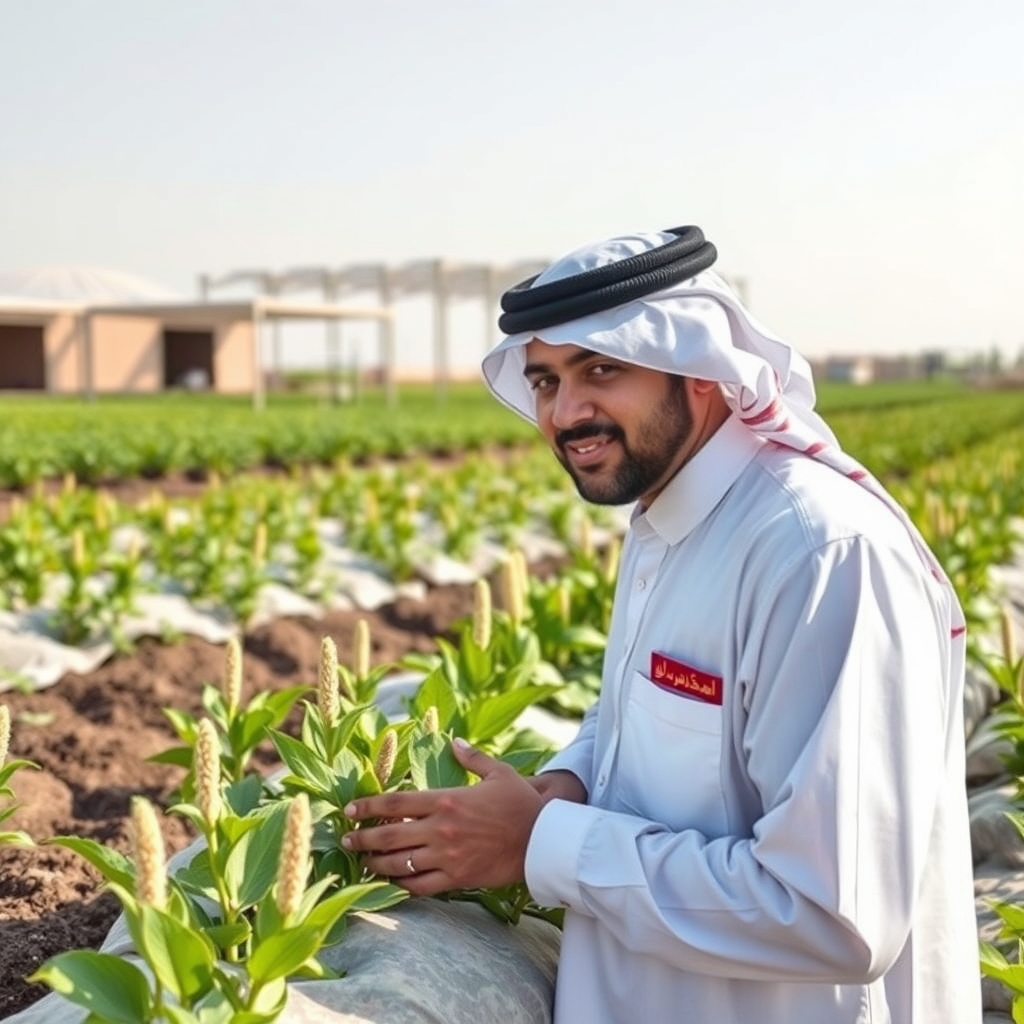
Baladna, best known for building Qatar’s domestic dairy industry from scratch after the 2017 Gulf blockade, is targeting a sweeping farming venture across Syrian territory. The project is designed to develop agricultural land and food production infrastructure on a scale that would rank among the largest foreign investments Syria has attracted in modern times.
Details of the exact location and phasing of the project have not been fully disclosed, but the $3.3 billion figure signals a long-term commitment rather than an exploratory stake.
Why are Gulf investors turning to Syria now?
Syria’s political landscape shifted dramatically at the end of 2024 when Bashar al-Assad’s government fell after more than five decades of family rule. The change opened a door that Gulf states, particularly Qatar and Saudi Arabia, have been moving through cautiously but with growing confidence.
Gulf capital is flowing into Syria across sectors, from infrastructure to agriculture, as investors look to secure early positions in a reconstruction economy that analysts believe will require hundreds of billions of dollars to rebuild. For Qatar, which backed opposition groups during the Syrian civil war, an early agricultural foothold carries both economic and diplomatic weight.
Why this deal matters for the Gulf
Food security has been a strategic obsession for Gulf states since the 2007-2008 global food price crisis exposed the region’s dependence on imports. Baladna itself was born out of exactly that logic when Qatar needed to replace dairy imports overnight during the blockade years.
A large Syrian farming operation would give Qatar and Baladna access to fertile land, water resources and agricultural labour at a fraction of the cost of equivalent projects in the GCC. Syria’s Euphrates basin and northwestern plains are historically productive farming zones that decades of conflict have left underutilised.
For the broader Gulf, Baladna’s move is a signal. If the investment proceeds smoothly, it could encourage other regional food and agribusiness companies to follow with their own Syrian projects, accelerating a reconstruction wave that Western companies have so far largely avoided due to lingering sanctions concerns.
How big is Baladna compared to other Gulf agri-investors?
- Baladna (Qatar), Syria: $3.3 billion planned agricultural investment
- Saudi Agricultural and Livestock Investment Co. (SALIC): Active in farmland acquisitions across Africa, Ukraine and Canada
- Abu Dhabi’s Al Dahra Agriculture: Operations in 10+ countries including Serbia, Egypt and Pakistan
- Baladna Qatar domestic operation: Built capacity to cover the majority of Qatar’s fresh dairy needs post-2017 blockade
What are the risks?
Syria remains a complex operating environment. International sanctions, particularly from the United States and European Union, still target wide sections of the Syrian economy, and any company doing business there must navigate those restrictions carefully. The legal and land ownership framework in post-Assad Syria is still being established, adding another layer of uncertainty for investors writing nine and ten-figure cheques.
Infrastructure damage from years of conflict also means that transforming agricultural land into productive, export-capable farms will require significant upfront costs before any returns materialise. Baladna’s bet is essentially that those risks are priced into the opportunity, and that first movers will benefit most when Syria stabilises.
What happens next?
The investment is still in its planning and agreement phase. Actual capital deployment will depend on regulatory approvals, sanctions compliance reviews and the pace of political stabilisation inside Syria. Baladna has not announced a construction or production timeline publicly.
Watch this space closely. If Baladna breaks ground, it will mark a watershed moment for Gulf commercial engagement with Syria, one that governments and corporations across the region will be watching to calibrate their own exposure.
For full details on the deal structure and the broader Gulf investment trend into Syria, read the original report from The National News.
Disclaimer: This article covers a financial and geopolitical topic. Readers should consult relevant legal and financial advisers before drawing investment conclusions.
Do you think Gulf agricultural investment is the right lever for Syria’s reconstruction, or does political uncertainty make it too risky too soon? Share your view in the comments below.

Related Posts


Stay Informed With the Latest & Most Important News
Previous Post
Next Post






Advertisement

-
 01UAE Team Emirates Stays Close in UCI Rankings Thanks to Tuckwell
 -
 02UAE E-Commerce Trends 2026: Why the Market Moves Fast
 -
 03Dubai Summer Surprises 2026: Full Arab Concert Lineup
 -
 04Sheikh Mohamed at G7: UAE Pledges Global Stability Role
 -
 05Windshield Sunshade in UAE Heat: Does It Actually Work?
 -
 06UAE Stocks Rally as Iran Ceasefire Talks Lift Gulf Markets
 -
 07Gulf Investors Blocked by European Rules, Saudi PIF Warns