
















Now Reading: Gaza’s Future: What the Wider Middle East War Means Now
-
01
Gaza’s Future: What the Wider Middle East War Means Now
Gaza’s Future: What the Wider Middle East War Means Now
Advertisement

The Gaza Strip's long-term fate is being overshadowed by the broader Middle East conflict. Here's what that means for the region and the Gulf. Click to read.
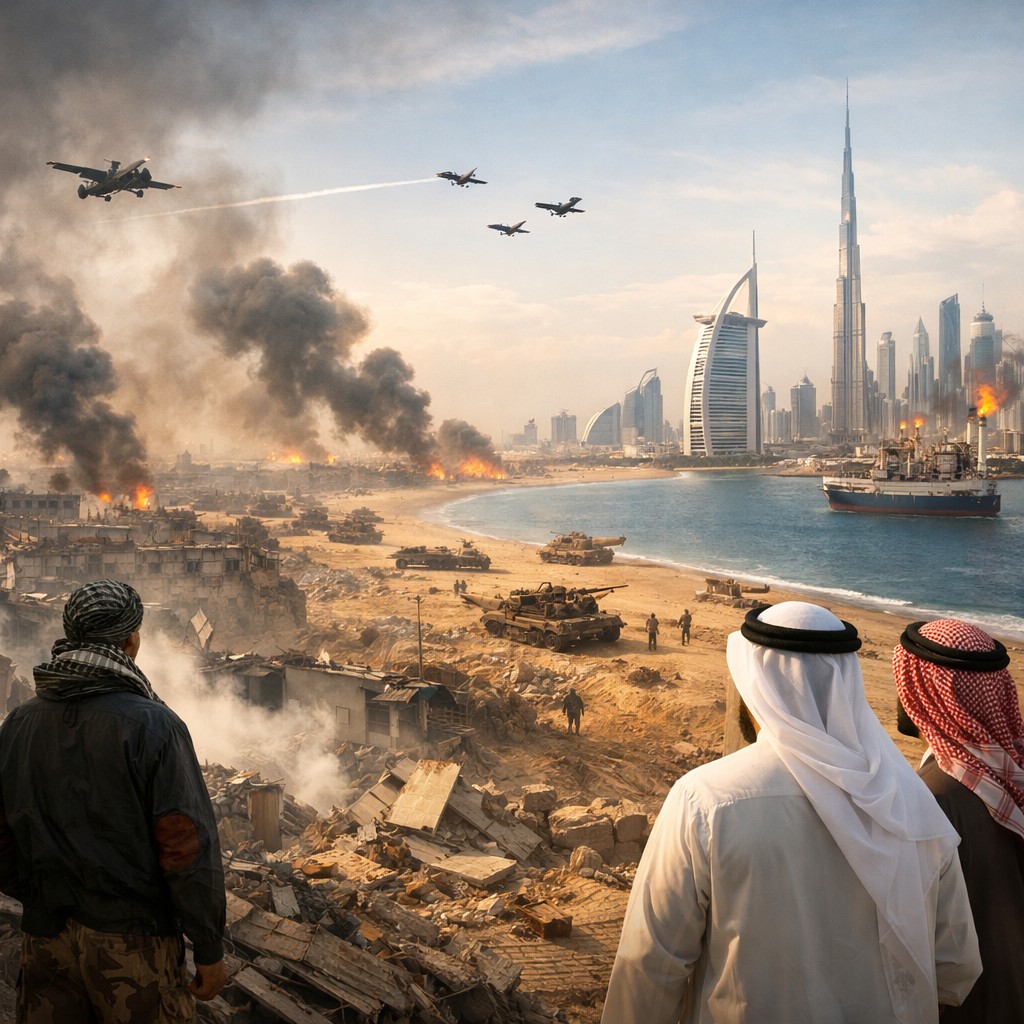
The question of what happens to Gaza after the fighting stops is getting lost in the noise of a wider regional war. As conflicts spread across multiple fronts, from Lebanon to Yemen and beyond, the long-term political and humanitarian fate of the Gaza Strip is struggling to hold the world’s attention, with no clear post-war framework in sight.
Why Is Gaza’s Future Being Overshadowed?
When a conflict expands across a region, individual flashpoints lose prominence in global diplomacy. That is exactly what is happening with Gaza. The original crisis, which began with the Hamas attack on Israel in October 2023, has since drawn in Hezbollah in Lebanon, Houthi forces in Yemen, and Iranian-backed factions across Iraq and Syria, pulling international focus in several directions at once.
Diplomatic bandwidth is finite. When world powers are managing escalation risks across multiple theaters, detailed negotiations over Gaza’s governance, reconstruction, and civil administration tend to get pushed down the agenda.
What Does ‘Eclipsed’ Actually Mean for Gazans?
For the civilians still inside Gaza, the practical consequences are severe. Humanitarian aid pipelines remain inconsistent, rebuilding plans are stalled, and no credible governing authority has been agreed upon to replace Hamas administration in the territory. The absence of a political roadmap is not a bureaucratic problem. It determines whether people can return to their homes, whether hospitals get rebuilt, and whether children go back to school.
International organizations have repeatedly warned that delay in establishing a post-conflict framework prolongs suffering and increases the risk of a power vacuum that extremist groups could exploit.
Why It Matters for the Gulf
Gulf states have a direct stake in how this plays out. Saudi Arabia’s normalization talks with Israel, which were progressing before October 2023, remain frozen and are unlikely to resume without visible progress on Palestinian statehood or at minimum a credible plan for Gaza’s future. The UAE and Bahrain, which signed the Abraham Accords in 2020, face domestic and regional pressure to take stronger public positions as the humanitarian toll mounts.
Gulf aid donors, including UAE-based organizations, have been among the most active in funding emergency relief for Gaza. But relief without a political solution is a holding pattern, not a resolution.
Key Pressure Points at a Glance
- Saudi-Israel normalization: Stalled indefinitely pending Gaza outcome
- Abraham Accords states: Facing rising regional criticism over perceived silence
- Gulf humanitarian aid: Active but operating without a long-term governance framework
- Yemen Houthi attacks: Directly disrupting Red Sea shipping, affecting Gulf trade routes
- Lebanese front: Hezbollah involvement has widened the diplomatic complexity for Arab mediators
Who Is Responsible for Gaza’s Post-War Plan?
That question has no agreed answer, and that is the core problem. The United States has floated various frameworks, including a reformed Palestinian Authority taking administrative control. Israel has rejected Hamas governance but has not publicly endorsed any alternative structure. Arab states have called for a two-state solution without specifying a transition mechanism. The gap between positions remains wide.
Qatar and Egypt, the two most active mediators in ceasefire talks, have maintained channels with all parties. But mediation on a ceasefire is different from building consensus on who governs 2.3 million people the morning after one takes effect.
What Happens If the Question Stays Unanswered?
History offers uncomfortable precedents. Post-conflict zones without agreed governance structures, think Libya after 2011 or parts of Syria, tend to fragment into competing armed factions. For Gaza, a territory with no natural resources, a devastated economy, and a young, traumatized population, that outcome would be catastrophic and would send refugee and instability pressures outward toward neighboring countries and the broader Gulf region.
The longer the wider Middle East conflict dominates headlines and diplomatic energy, the further Gaza’s political resolution gets pushed into the future. That delay has a human cost measured daily.
For the full context on how Gaza’s fate is being sidelined by the expanding regional conflict, read the original report.
With Gulf states holding significant diplomatic and financial leverage in this conflict, do you think Arab nations are doing enough to push for a concrete plan for Gaza’s future? Share your thoughts below.
Disclaimer: This article covers an ongoing political conflict. Situations may change rapidly. Readers are encouraged to consult multiple news sources for the latest developments.

Related Posts


Stay Informed With the Latest & Most Important News
Previous Post
Next Post






Advertisement

-
 01UAE Team Emirates Stays Close in UCI Rankings Thanks to Tuckwell
 -
 02UAE E-Commerce Trends 2026: Why the Market Moves Fast
 -
 03Dubai Summer Surprises 2026: Full Arab Concert Lineup
 -
 04Sheikh Mohamed at G7: UAE Pledges Global Stability Role
 -
 05Windshield Sunshade in UAE Heat: Does It Actually Work?
 -
 06UAE Stocks Rally as Iran Ceasefire Talks Lift Gulf Markets
 -
 07Gulf Investors Blocked by European Rules, Saudi PIF Warns