















Now Reading: US Strikes Iran Again: What Gulf States Need to Know
-
01
US Strikes Iran Again: What Gulf States Need to Know
US Strikes Iran Again: What Gulf States Need to Know
Advertisement

The US has launched fresh strikes against Iran as Gulf states face heightened tension. Here's what the escalation means for the region and you.
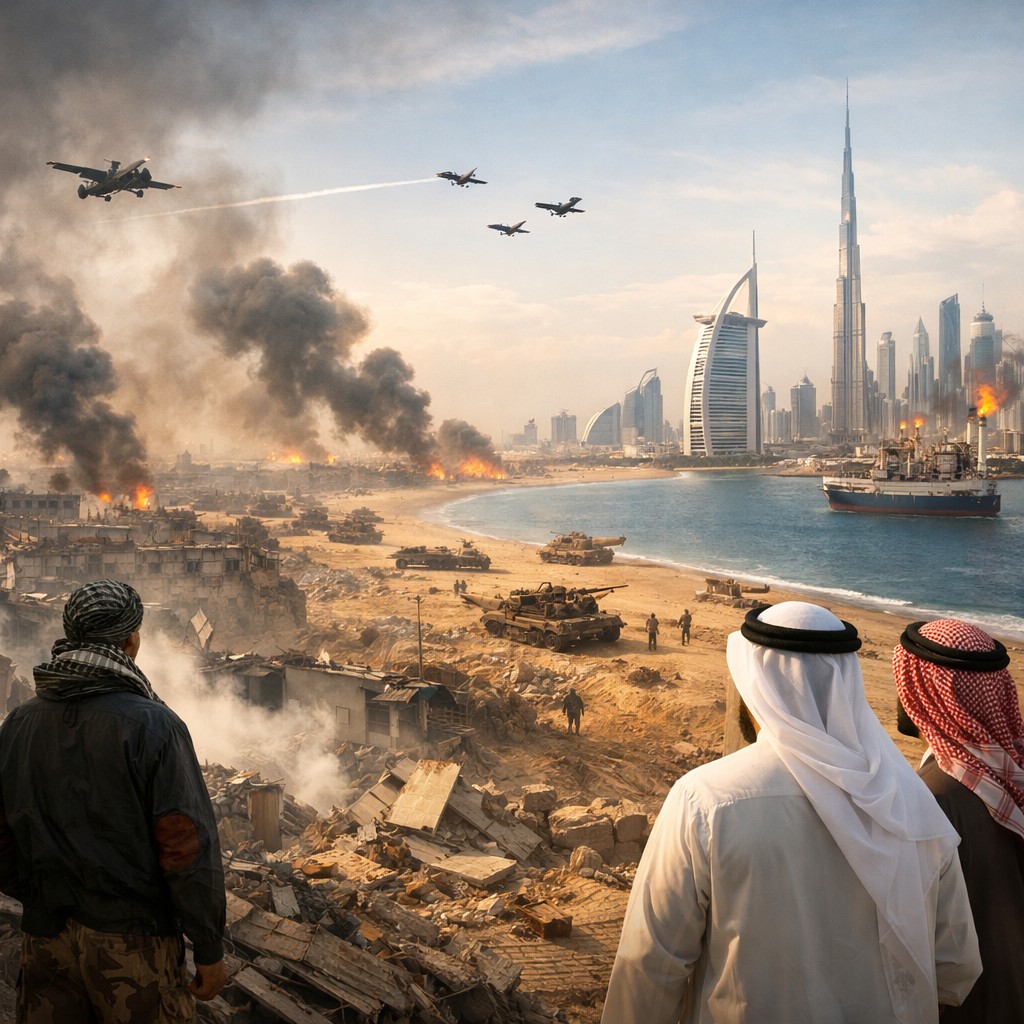
The United States has carried out a new wave of strikes against Iran, raising the security temperature across the Gulf region. The attacks mark a significant escalation in hostilities, with Gulf states now confronting the immediate and longer-term consequences of an intensifying military confrontation on their doorstep.
What happened: Fresh US strikes hit Iran
American forces launched another round of strikes targeting Iran, according to a original report from Dubai Eye 103.8. The strikes come amid mounting tensions that have steadily built between Washington and Tehran, with both sides showing little sign of stepping back from a confrontational posture.
Details on the exact targets and scale of the latest operation are still emerging, but the pattern signals a sustained American military campaign rather than an isolated incident.
Are Gulf states under attack?
Reports indicate Gulf states are facing direct security threats linked to this escalation. The precise nature of those threats, whether missile launches, drone activity or proxy operations, underscores how interconnected the security of the broader Gulf region is with any direct US-Iran confrontation.
Countries across the Arabian Peninsula have long warned that a hot war between Washington and Tehran would not stay contained. That scenario now appears closer to reality than at any point in recent years.
Why it matters for the Gulf
The Gulf Cooperation Council states, including the UAE, Saudi Arabia, Qatar, Kuwait, Bahrain and Oman, sit at the geographic center of any US-Iran conflict. Critical infrastructure, shipping lanes, and energy exports all pass through or near waters that become flashpoints the moment tensions spike.
The Strait of Hormuz, through which a significant share of global oil supply flows, is particularly vulnerable. Any disruption there reverberates instantly through global energy markets and hits Gulf economies that depend on stable export conditions.
For residents across the UAE and wider Gulf, the immediate concerns range from air-space safety and travel disruptions to economic uncertainty. Businesses with regional exposure are already recalculating risk.
How this compares to previous escalations
| Escalation Point | Key Feature |
|---|---|
| 2019 tanker attacks in Gulf of Oman | Targeted commercial shipping; stopped short of direct military exchange |
| January 2020 Soleimani strike | US killed Iran’s top general; Iran retaliated with ballistic missiles at US bases in Iraq |
| 2024 Red Sea Houthi campaign | Iran-backed attacks on commercial vessels prompted sustained US and UK air operations |
| Current US strikes on Iran | Direct strikes on Iranian territory or assets; Gulf states facing concurrent security pressure |
What Gulf governments are watching
UAE and Saudi officials have consistently advocated for de-escalation through diplomacy. Both countries maintain pragmatic economic and diplomatic ties that require regional stability. A prolonged military campaign between the US and Iran puts those balancing acts under severe strain.
Qatar, home to the largest US air base in the Middle East, Al Udeid, faces a particularly sensitive position. Any deepening of American military operations in the region increases both the strategic value and the potential risk of that presence.
What happens next
The coming hours and days will be decisive. Iran’s response, the scale of any Gulf-based threats, and diplomatic signals from Washington, Riyadh and Abu Dhabi will shape whether this remains a contained exchange or broadens into a wider regional conflict.
Residents across the Gulf are advised to monitor official government channels for travel and safety updates as the situation develops.
Disclaimer: This article covers an ongoing political and military situation. Circumstances are rapidly evolving; readers should consult official government sources for the latest safety and travel guidance.
As tensions between the US and Iran reach another dangerous peak, do you think Gulf states have done enough to insulate themselves from the fallout, or is deeper regional diplomacy overdue? Share your thoughts in the comments below.

Related Posts

Stay Informed With the Latest & Most Important News
Previous Post
Next Post







Advertisement

-
 01UAE Team Emirates Stays Close in UCI Rankings Thanks to Tuckwell
 -
 02UAE E-Commerce Trends 2026: Why the Market Moves Fast
 -
 03Dubai Summer Surprises 2026: Full Arab Concert Lineup
 -
 04Sheikh Mohamed at G7: UAE Pledges Global Stability Role
 -
 05Windshield Sunshade in UAE Heat: Does It Actually Work?
 -
 06UAE Stocks Rally as Iran Ceasefire Talks Lift Gulf Markets
 -
 07Gulf Investors Blocked by European Rules, Saudi PIF Warns