















Now Reading: UAE Pallet Market Set for Major Growth Through 2034
-
01
UAE Pallet Market Set for Major Growth Through 2034
UAE Pallet Market Set for Major Growth Through 2034
Advertisement

UAE pallet market is expanding fast through 2034, driven by smart storage demand. Here's what it means for Gulf logistics and trade. Click to read more.
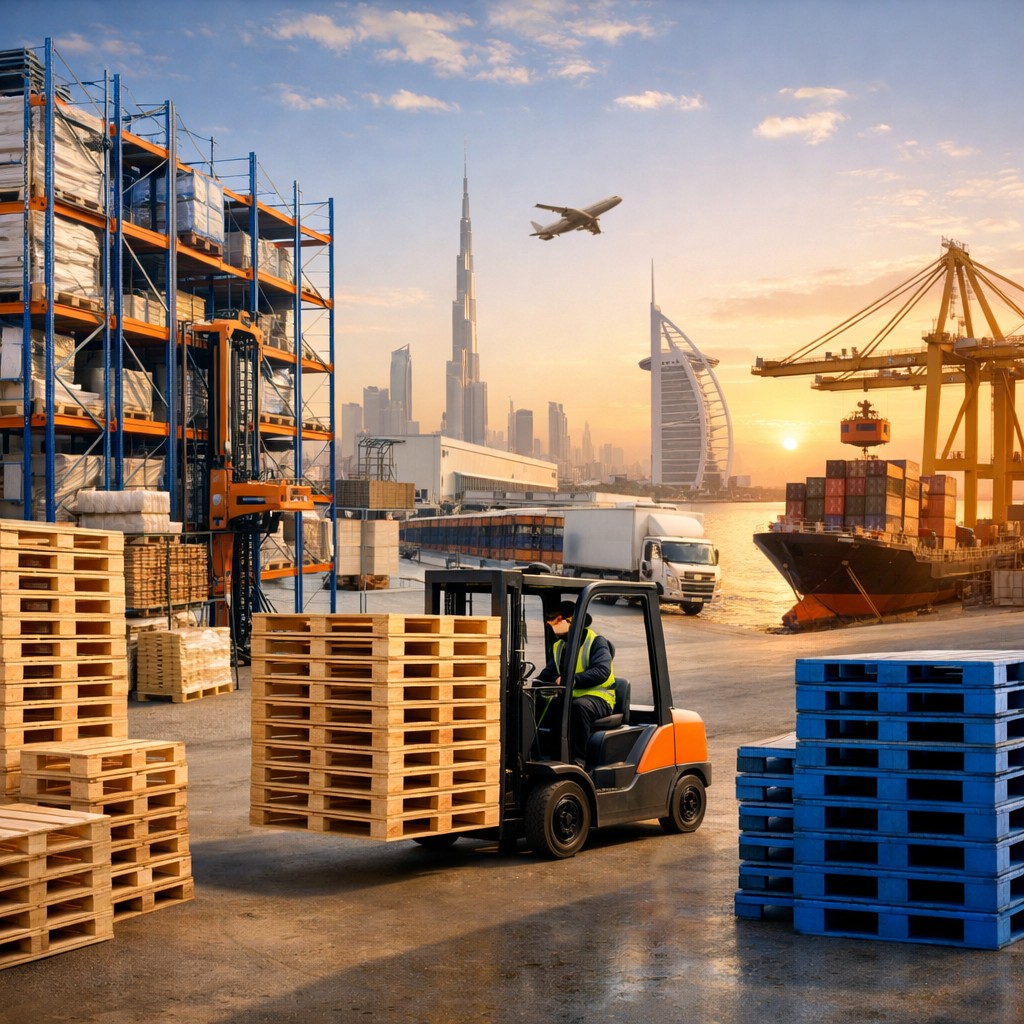
The UAE pallet market is on a strong upward trajectory between 2026 and 2034, fueled by rising demand for smart storage solutions, expanding e-commerce infrastructure, and the country’s ambition to become a global logistics hub. For Gulf businesses in warehousing, retail, and manufacturing, the shift is already reshaping how goods move and get stored.
What is driving UAE pallet market growth?
Several forces are converging at once. The UAE’s rapid expansion of free zones, cold chain logistics networks, and last-mile delivery infrastructure has pushed demand for efficient, durable pallets to new heights. Traditional wooden pallets are increasingly giving way to plastic and smart pallets embedded with tracking technology, reflecting a broader push toward supply chain digitization across the Emirates.
The country’s position as a regional trade gateway, connecting Asia, Africa, and Europe through ports like Jebel Ali, makes efficient storage and handling equipment not a luxury but a baseline requirement for competitive operations.
What are smart storage solutions and why do they matter?
Smart storage goes beyond shelving and racking. It incorporates RFID-enabled pallets, automated guided vehicles, and warehouse management systems that communicate in real time. For UAE companies managing high-volume inventories, these tools cut losses, reduce labor costs, and improve order accuracy.
The growing adoption of such technology across Dubai’s logistics corridors and Abu Dhabi’s industrial zones is a direct signal that the sector is maturing fast. Businesses that lag on adoption risk falling behind competitors already operating leaner, more connected warehouses.
Why it matters for the Gulf
The UAE does not sit in isolation. Its pallet and warehousing market trends ripple across Saudi Arabia, Oman, Qatar, and Kuwait, where similar infrastructure investments are underway. As Gulf nations diversify away from oil dependency, manufacturing, retail, and food logistics are emerging as growth pillars, all of which rely heavily on efficient storage and materials handling.
For regional investors and procurement managers, the trajectory of the UAE market offers a clear signal about where capital expenditure in logistics is heading over the next decade.
Key segments shaping the market
- Plastic pallets: Growing preference due to hygiene standards in food and pharma sectors
- Wooden pallets: Still dominant by volume, but losing share to more durable alternatives
- Smart or RFID pallets: Fastest-growing segment, aligned with UAE’s Industry 4.0 push
- Rental and pooling services: Gaining traction among companies looking to reduce capital outlay
- Automated storage systems: Increasingly bundled with pallet solutions in large distribution centers
Who are the key players in UAE pallet solutions?
The market features a mix of global manufacturers and regional distributors competing on price, durability, and tech integration. Companies offering end-to-end solutions, combining pallets with warehouse management software, are carving out a competitive advantage as clients look to reduce vendor complexity.
Local manufacturing of pallets within UAE free zones is also growing, partly as a cost-reduction measure and partly to meet the government’s broader economic diversification goals.
What does the 2026 to 2034 outlook look like?
The forecast period covers some of the most consequential years for UAE economic policy, including targets set under UAE Centennial 2071 and ongoing investments in non-oil GDP growth. Logistics and smart industrial infrastructure sit at the center of those plans.
According to the original report, the market is expected to expand significantly through 2034, with smart storage solutions among the highest-growth categories. Businesses entering or expanding in the UAE during this window have a strong incentive to align their logistics infrastructure with where the market is heading, not where it has been.
What should Gulf businesses do now?
For procurement teams, now is the time to audit current storage and handling setups. The gap between companies running legacy pallet systems and those using smart, connected solutions is widening. Early movers will benefit from better inventory control, lower spoilage rates, and stronger compliance with increasingly strict food and pharmaceutical handling regulations across the GCC.
For investors, the pallet and smart storage space in the UAE represents a relatively underreported slice of the logistics boom, one with consistent demand drivers and long contract cycles.
Disclaimer: This article is based on market research reporting and is intended for informational purposes only. It does not constitute financial or investment advice.
As the UAE races to cement its status as the region’s premier logistics and trade hub, how prepared is your business for the smart storage shift? Share your thoughts in the comments below.

Stay Informed With the Latest & Most Important News
Previous Post
Next Post








Advertisement

-
 01UAE Team Emirates Stays Close in UCI Rankings Thanks to Tuckwell
 -
 02UAE E-Commerce Trends 2026: Why the Market Moves Fast
 -
 03Dubai Summer Surprises 2026: Full Arab Concert Lineup
 -
 04Sheikh Mohamed at G7: UAE Pledges Global Stability Role
 -
 05Windshield Sunshade in UAE Heat: Does It Actually Work?
 -
 06UAE Stocks Rally as Iran Ceasefire Talks Lift Gulf Markets
 -
 07Gulf Investors Blocked by European Rules, Saudi PIF Warns