





Now Reading: Aluminum Scrap Trade: EU Delays Rules as Dubai Exports Pause
-
01
Aluminum Scrap Trade: EU Delays Rules as Dubai Exports Pause
Aluminum Scrap Trade: EU Delays Rules as Dubai Exports Pause
Advertisement

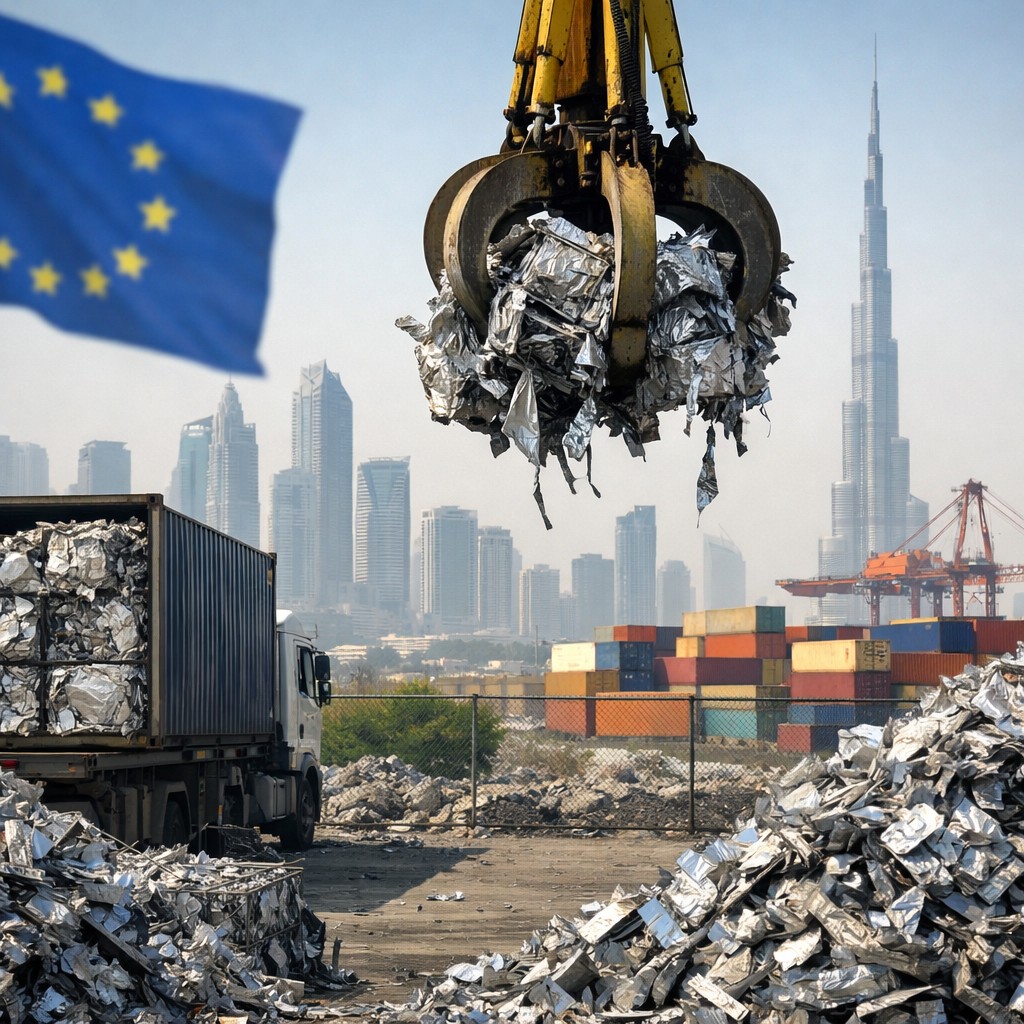
The EU has delayed new aluminum scrap trade restrictions while Dubai's exports have come to a halt. Here's what it means for Gulf traders and the region.
The aluminum scrap trade is facing a pivotal moment as the European Union postpones tighter controls on cross-border scrap shipments while Dubai’s exports in this category have come to a standstill. The dual development is drawing significant attention from commodity traders across the Gulf, as regulatory uncertainty in Europe and shifting export patterns in the UAE reshape one of the region’s key secondary metals markets.
What Is the EU Delaying in Aluminum Scrap Trade?
The EU had been advancing toward stricter rules governing the aluminum scrap trade, part of a broader European push to tighten oversight of waste and recyclable material shipments across borders. Those measures have now been pushed back, giving exporters and importers additional time to adapt their operations and supply chains.
For traders who rely on moving scrap metal between the Gulf and European markets, the delay removes an immediate compliance burden. However, the long-term regulatory direction remains firmly in place. The postponement signals a speed bump, not a policy reversal. Brussels continues to move toward more demanding scrap classifications, documentation of material quality, and proof of processing standards.
This matters beyond Europe’s borders. European buyers consistently set benchmarks that influence global trade flows. When EU standards tighten, exporters in the Middle East, Asia, and Africa must adapt or risk losing access to one of the world’s largest import markets for secondary metals.
Why Have Dubai’s Aluminum Scrap Exports Paused?
Dubai, a significant re-export and processing hub for scrap metals across the region, has seen its aluminum scrap exports come to a near standstill. The pause is closely tied to shifting market conditions and the anticipation of incoming European regulations. Traders appear to be holding positions and reassessing shipment strategies in the face of ongoing regulatory ambiguity.
The UAE has long served as a critical transit point for aluminum scrap flowing between Asia, Africa, and Europe. Its free zones, port infrastructure, and established trading networks make it a natural clearing house for secondary metals. Any meaningful disruption to that flow produces downstream effects on recyclers, smelters, and commodity brokers operating across multiple continents.
When export activity stalls at a hub of Dubai’s scale, warehousing costs rise, liquidity tightens, and smaller traders face acute cash flow pressure. The current pause underscores how interconnected regional trade is with European policy cycles. For the latest developments on UAE trade activity, follow our daily news coverage.
Key Factors Shaping the Market Right Now
Several converging forces are defining the current state of aluminum scrap trade across the Gulf and beyond. Understanding each helps traders and analysts gauge what comes next.
- EU enforcement delay: New aluminum scrap trade restrictions have been postponed, but the regulatory trajectory has not changed.
- Dubai export pause: Aluminum scrap shipments from Dubai have stalled as market participants reassess positioning.
- Trader uncertainty: Ambiguity over timelines is affecting inventory decisions and contract negotiations across the Gulf.
- Long-term EU direction: Stricter scrap classification and documentation requirements remain on course for eventual implementation.
- UAE’s strategic role: The Emirates functions as a key re-export node between continents, amplifying the regional impact of any trade disruption.
For broader context on how commodity market shifts affect Gulf economies, visit our finance section for in-depth analysis.
What Happens When the EU Delay Ends?
Once the EU moves forward with its restrictions, exporters in the UAE will face a more demanding compliance environment. Shipments are likely to require more detailed material classification, documented proof of quality standards, and evidence of responsible processing practices. Traders who begin auditing their supply chains and aligning with anticipated EU requirements now will be significantly better positioned than those who wait for formal enforcement.
The current pause in Dubai’s exports may also reflect a broader market recalibration. If global aluminum prices or demand signals shift materially during this period of uncertainty, the resumption of trade may look quite different from what preceded it. New buyers, revised pricing structures, and adjusted logistics routes are all plausible outcomes once clarity returns to the regulatory environment.
Industry observers note that companies which invest in traceability systems and quality documentation during quiet periods tend to capture higher-value contracts when markets reopen. The compliance cost is real, but so is the competitive advantage it creates. According to data and analysis published by S&P Global Commodity Insights, regulatory shifts in major import markets routinely reshape trade flow patterns in secondary metals for months or years after implementation.
The Bigger Picture for UAE Commodity Traders
Aluminum scrap trade sits within a wider story about circular economy policy in Europe and the Gulf’s evolving role in global recycling supply chains. The UAE has invested substantially in positioning itself as a sustainable and forward-looking trade hub, and secondary metals are central to that narrative.
Regulatory friction with the EU could complicate that ambition in the short term, but it could equally push local operators to raise their standards and compete for higher-value markets. Companies that treat compliance as a strategic investment rather than a cost burden are likely to strengthen their positions as the global scrap trade becomes more regulated and transparent.
The aluminum scrap trade story is ultimately about adaptation. The Gulf’s traders, recyclers, and logistics operators have navigated complex regulatory shifts before. With preparation and foresight, the current pause and the coming EU changes represent a challenge that the region’s secondary metals sector is capable of meeting.

Related Posts



Stay Informed With the Latest & Most Important News
Previous Post
Next Post







Advertisement

-
 01Sheikh Mohamed at G7: UAE Pledges Global Stability Role
 -
 02UAE Team Emirates Stays Close in UCI Rankings Thanks to Tuckwell
 -
 03UAE Stocks Rally as Iran Ceasefire Talks Lift Gulf Markets
 -
 04Gulf Investors Blocked by European Rules, Saudi PIF Warns
 -
 05UAE Tourism 2025: UK Lifts Warning as Hotels and Flights Boom
 -
 06Windshield Sunshade in UAE Heat: Does It Actually Work?
 -
 07Working on a Public Holiday in UAE: Know Your Rights