

















Now Reading: UAE Joins Philippines & Indonesia in CPTPP Trade Talks
-
01
UAE Joins Philippines & Indonesia in CPTPP Trade Talks
UAE Joins Philippines & Indonesia in CPTPP Trade Talks
Advertisement

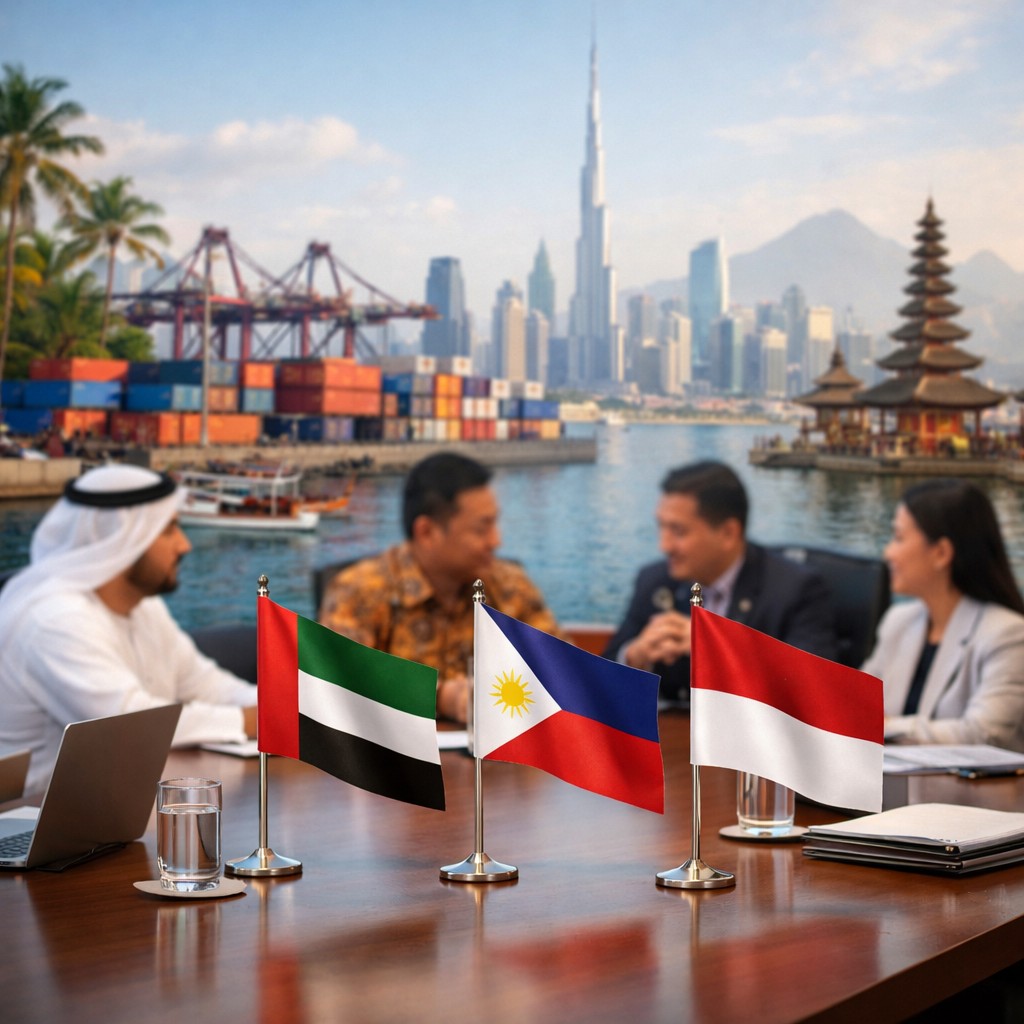
UAE, Philippines and Indonesia are set to begin CPTPP accession talks, opening doors to a major Asia-Pacific trade bloc. Here's what it means for the Gulf.
The UAE, the Philippines, and Indonesia are moving toward formal accession talks to join the Comprehensive and Progressive Agreement for Trans-Pacific Partnership, known as CPTPP. The move signals a significant shift in how Gulf and Southeast Asian economies are positioning themselves within global trade networks, with the UAE standing to gain expanded market access across the Asia-Pacific region.
What Is the CPTPP and Why Are These Countries Seeking Entry?
The CPTPP is one of the world’s largest free trade agreements, covering eleven member nations including Japan, Canada, Australia, Singapore, and Mexico. It governs trade rules, tariff reductions, and investment protections across a bloc that represents a substantial share of global GDP.
For the UAE, joining would mean preferential access to markets it currently trades with under standard terms. As the country continues to diversify its economy away from oil dependence, securing structured trade relationships with high-growth Asia-Pacific economies fits squarely within its long-term development strategy.
What Does This Mean for the Gulf Region?
The UAE has been aggressively expanding its trade footprint. In recent years, Abu Dhabi and Dubai have signed Comprehensive Economic Partnership Agreements, known as CEPAs, with countries ranging from India to Indonesia and Israel. A CPTPP membership would layer on top of those bilateral deals, giving UAE exporters, logistics firms, and financial services providers broader and more consistent access to Asia-Pacific supply chains.
For Gulf businesses, the implications are real. The UAE serves as a re-export and logistics hub for a wide range of goods flowing between Asia, Africa, and Europe. CPTPP membership could strengthen that role by aligning UAE trade rules more closely with a bloc that already has deep intra-regional commerce.
How Do the Three Applicants Compare?
| Country | Region | Key Trade Interest in CPTPP |
|---|---|---|
| UAE | Middle East / Gulf | Logistics, financial services, re-exports |
| Philippines | Southeast Asia | Manufacturing, agriculture, services |
| Indonesia | Southeast Asia | Commodities, consumer goods, digital trade |
What Happens Next in the Accession Process?
Accession to the CPTPP is not a quick process. Each applicant must negotiate with existing members, align domestic regulations with CPTPP standards, and pass a working group review. The UK completed this process and formally joined the bloc in 2023, setting a recent precedent for non-founding members.
For the UAE, the domestic regulatory groundwork laid through its CEPA program may help streamline some of the accession requirements. Still, negotiations can take years and require compromise on sensitive areas including intellectual property rules, government procurement, and labor standards.
UAE’s Broader Trade Ambitions in Context
This development fits a clear pattern. The UAE has been one of the most active countries in the world when it comes to forging new trade agreements over the past three years. CPTPP membership would give the country a seat at the table in a rules-based Asia-Pacific framework, rather than relying solely on bilateral deals.
For UAE residents, businesses, and investors, that kind of market integration could translate into cheaper imports, more investment opportunities, and stronger demand for UAE-based services from CPTPP member countries.
You can read more details about the accession announcement in the original report from Bloomberg.
Disclaimer: This article covers international trade and financial policy. Readers should consult qualified trade or financial advisors before making business decisions based on developments in ongoing trade negotiations.
If the UAE succeeds in joining the CPTPP, it could reshape Gulf trade dynamics for decades. Do you think this move benefits UAE businesses and residents, or does it create new competitive pressures? Share your thoughts in the comments below.

Related Posts


Stay Informed With the Latest & Most Important News
Previous Post
Next Post






Advertisement

-
 01UAE Team Emirates Stays Close in UCI Rankings Thanks to Tuckwell
 -
 02UAE E-Commerce Trends 2026: Why the Market Moves Fast
 -
 03Dubai Summer Surprises 2026: Full Arab Concert Lineup
 -
 04Sheikh Mohamed at G7: UAE Pledges Global Stability Role
 -
 05Windshield Sunshade in UAE Heat: Does It Actually Work?
 -
 06UAE Stocks Rally as Iran Ceasefire Talks Lift Gulf Markets
 -
 07Gulf Investors Blocked by European Rules, Saudi PIF Warns