
















Now Reading: Trump UAE Relations: How the Iran War Shift Changed Things
-
01
Trump UAE Relations: How the Iran War Shift Changed Things
Trump UAE Relations: How the Iran War Shift Changed Things
Advertisement

Trump was riding high in UAE public opinion — then his military strikes on Iran reshuffled Gulf politics overnight. Here's what changed and why it matters.
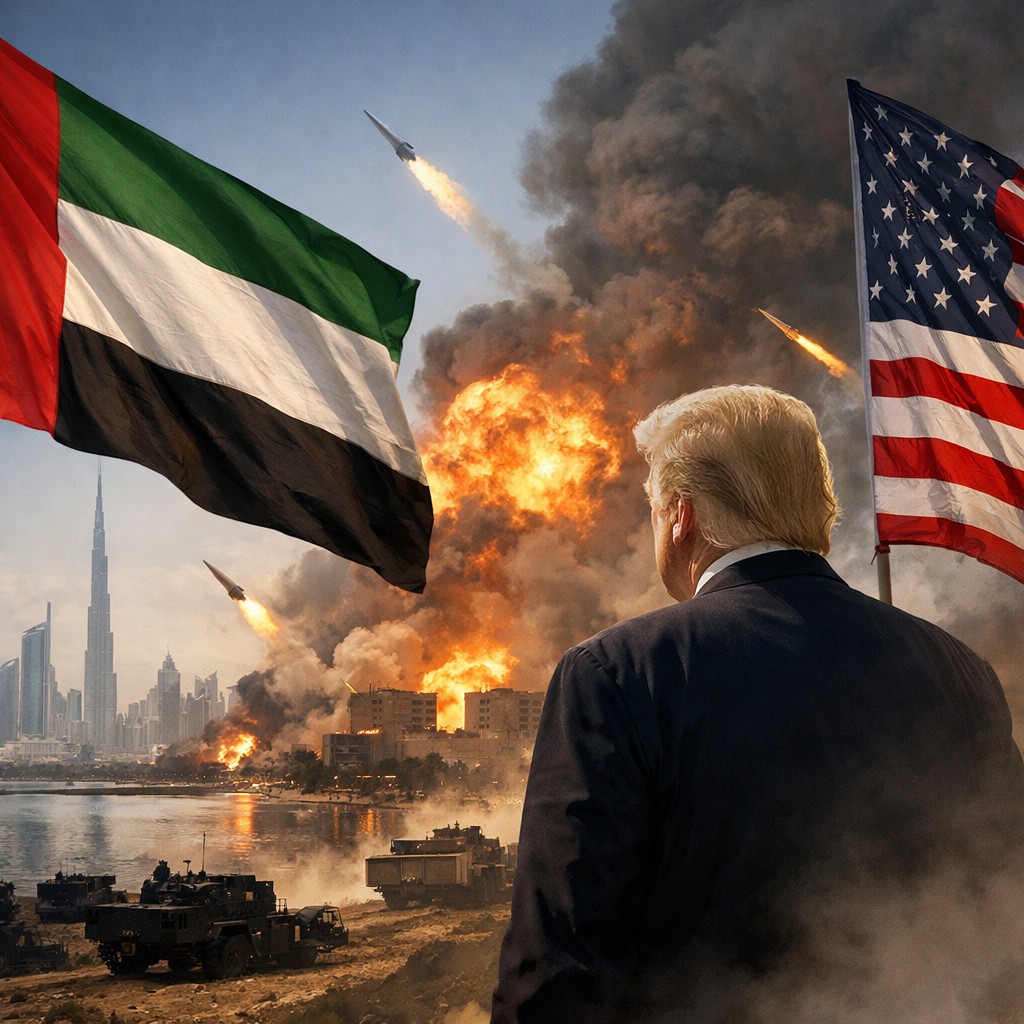
Donald Trump enjoyed genuine goodwill across the UAE, built on his first-term Abraham Accords and a reputation as a deal-maker friendly to Gulf interests. That standing took a hit when the United States moved to direct military confrontation with Iran, a development that forced UAE leaders and residents to reconsider Washington’s role in regional stability.
Why Was Trump Popular in the UAE?
The UAE had concrete reasons to view Trump favorably. His administration brokered the 2020 Abraham Accords, normalizing relations between the UAE and Israel and cementing Abu Dhabi’s status as a regional diplomatic heavyweight. Gulf business communities also welcomed his transactional style and his willingness to push back against Iranian influence.
For ordinary Emirati and expatriate residents, Trump represented American engagement rather than American retreat. That counted for a lot in a region where security guarantees from Washington underpin everything from trade to tourism.
What Changed When the US Went to War?
Military strikes against Iran introduced a calculation the UAE had long tried to avoid: being caught between its American security partner and an Iranian neighbor it shares trade routes, airspace, and a significant expatriate population with. The UAE has spent years threading that needle through quiet diplomacy, and open US-Iran warfare tears the thread.
The concern is not ideological sympathy for Tehran. It is geography and economics. Iranian-linked disruptions to shipping in the Strait of Hormuz, through which a large share of the region’s oil exports pass, carry immediate consequences for Gulf economies. Any escalation near UAE waters or airspace puts Dubai’s aviation and financial hub status directly at risk.
Why It Matters for the Gulf
For the broader Gulf region, the shift in US posture raises questions that go beyond one president’s approval rating. Gulf states have structured their defense, their currency pegs, and their investment strategies around a predictable American presence. When that presence turns unpredictable, hedging becomes unavoidable.
Saudi Arabia, Qatar, Kuwait and others face the same dilemma. Each has carefully managed relationships with both Washington and Tehran. A shooting war between the two forces every Gulf capital to pick sides publicly, something they have spent decades avoiding.
How Gulf Sentiment Has Shifted: A Quick Look
- Abraham Accords era: Trump seen as architect of UAE-Israel normalization, high approval in business and government circles.
- Post-strikes: Concern grows over regional spillover, Strait of Hormuz security, and UAE’s exposure to Iranian retaliation.
- Key tension: UAE values US security umbrella but cannot afford economic disruption from an Iran conflict on its doorstep.
- Diplomatic posture: Abu Dhabi likely to push privately for de-escalation while maintaining public neutrality.
What Does This Mean for Expats Living in the UAE?
The UAE is home to millions of expatriates, including large communities from South Asia, the Arab world, Iran, Europe and North America. Any serious escalation in the Gulf affects flight routes, insurance costs, and the general sense of security that makes Dubai and Abu Dhabi attractive places to live and work. Embassies periodically update travel advisories, and residents should monitor those channels.
For now, the UAE government has given no indication that daily life will be disrupted. But the gap between official calm and public unease tends to widen when regional headlines turn this serious.
Where Does the US-UAE Relationship Go From Here?
The relationship is deep enough to survive turbulence. The US and UAE share military infrastructure, intelligence cooperation, and billions in trade and investment. Neither side benefits from a rupture. But the era of uncomplicated Gulf enthusiasm for Trump, grounded in the Abraham Accords and the promise of prosperity-focused politics, has given way to something more complicated.
Abu Dhabi will keep talking to Washington. It will also keep talking to Tehran, Beijing, and everyone else. That is not a betrayal of the American partnership. It is the UAE’s defining foreign policy logic, and a US war posture that ignores it creates friction no amount of deal-making can smooth over quickly.
For more on how this story developed, read the original report from The Washington Post.
Do you think the UAE can maintain its balancing act between Washington and Tehran as tensions escalate, or has this conflict forced a choice that cannot be avoided? Share your thoughts in the comments below.
Disclaimer: This article covers geopolitical and foreign policy developments. Opinions expressed by analysts or attributed to sources reflect those sources alone and do not constitute official policy positions.

Related Posts
Stay Informed With the Latest & Most Important News
Previous Post
Next Post






Advertisement

-
 01UAE Team Emirates Stays Close in UCI Rankings Thanks to Tuckwell
 -
 02UAE E-Commerce Trends 2026: Why the Market Moves Fast
 -
 03Dubai Summer Surprises 2026: Full Arab Concert Lineup
 -
 04Sheikh Mohamed at G7: UAE Pledges Global Stability Role
 -
 05Windshield Sunshade in UAE Heat: Does It Actually Work?
 -
 06UAE Stocks Rally as Iran Ceasefire Talks Lift Gulf Markets
 -
 07Gulf Investors Blocked by European Rules, Saudi PIF Warns