
















Now Reading: Rubio Briefs UAE Leader on Iran Deal, Pledges Gulf Security
-
01
Rubio Briefs UAE Leader on Iran Deal, Pledges Gulf Security
Rubio Briefs UAE Leader on Iran Deal, Pledges Gulf Security
Advertisement

US Secretary of State Rubio discussed the Iran-US nuclear deal with UAE leadership and reaffirmed Emirati security commitments. Here's what it means for the Gulf.
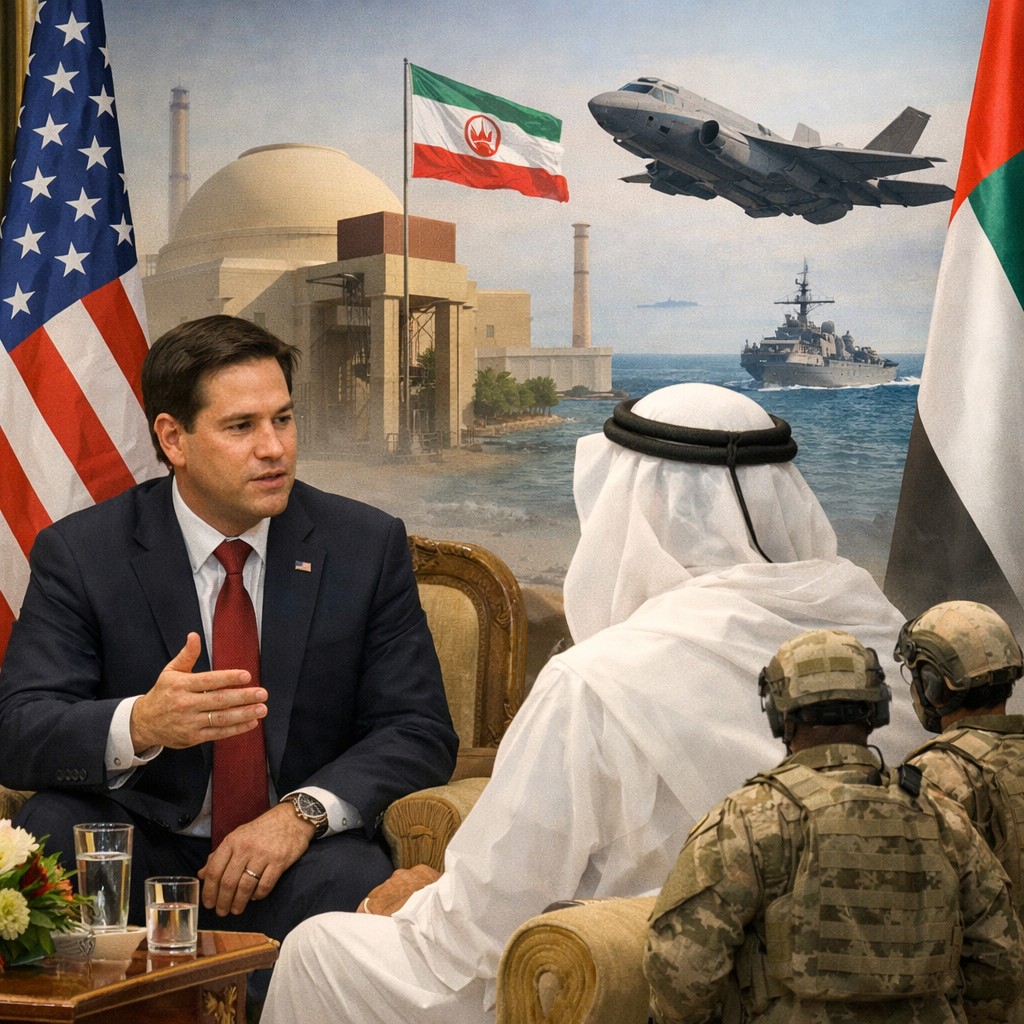
US Secretary of State Marco Rubio has personally briefed UAE leadership on the progress of nuclear negotiations with Iran and reaffirmed Washington’s commitment to Emirati security. The conversations signal that Washington is keeping its Gulf partners closely informed as talks with Tehran advance, a move that reflects long-standing regional anxieties about any agreement that could loosen pressure on Iran.
What Did Rubio Tell UAE Leaders?
According to a State Department spokesman, Rubio held discussions with senior UAE officials covering the status of ongoing Iran-US nuclear negotiations. He also delivered direct assurances that American security commitments to the Emirates remain firm, regardless of where the Iran talks lead.
The UAE has long viewed an emboldened Iran as a direct threat, given Tehran’s support for proxy groups across the region and its history of targeting Gulf shipping and infrastructure. Any deal that eases sanctions on Iran or restores its economic leverage is watched closely in Abu Dhabi and Dubai.
Why It Matters for the Gulf
For Gulf states, the stakes in the Iran nuclear file go well beyond nonproliferation. A deal that lifts sanctions could free up tens of billions of dollars for Tehran, money that Gulf capitals fear may fund regional militias, missile programs, and influence operations across Yemen, Iraq, Lebanon, and beyond.
The UAE has pursued a complex balancing act in recent years, maintaining trade ties with Iran while hosting a major US military presence and deepening security cooperation with Washington. Rubio’s outreach suggests the US is aware of that tension and is working to reassure Emirati officials before any agreement is finalized.
How Does This Fit the Broader US-Gulf Posture?
The Trump administration has framed its Gulf diplomacy around a twin track: pursuing a negotiated limit on Iran’s nuclear program while simultaneously strengthening security ties with Arab partners. Rubio’s engagement with UAE leadership fits that pattern, mirroring similar consultations the administration has reportedly held with Saudi officials.
The UAE hosts Al Dhafra Air Base, a critical American installation used for surveillance and strike operations across the wider Middle East. That basing relationship gives Abu Dhabi considerable leverage in its conversations with Washington, and both sides have an interest in keeping the partnership stable during a sensitive diplomatic period.
Key Points at a Glance
- Rubio discussed Iran-US nuclear negotiations directly with UAE leadership.
- The US reaffirmed its security commitments to the Emirates.
- The briefing reflects Gulf concern that a nuclear deal could strengthen Iran regionally.
- The UAE hosts significant US military assets, underpinning the security relationship.
- Similar consultations are understood to be ongoing with other Gulf partners.
What Happens If a Deal Is Reached?
Gulf states have historically pushed for a seat at the table whenever Washington negotiates with Tehran. The 2015 JCPOA was criticised by Saudi Arabia and the UAE partly because they felt sidelined during the process. This time, active consultations with Rubio suggest the administration is attempting to avoid repeating that diplomatic friction.
Still, assurances and a final agreement are two different things. Gulf leaders will be watching whether any deal includes provisions on Iran’s ballistic missile program and regional proxy networks, the two issues that matter most to security planners in Abu Dhabi and Riyadh.
What the UAE Has Said Publicly
Emirati officials have not issued a detailed public response to the Rubio conversations, which is consistent with the UAE’s preference for quiet diplomacy on sensitive security matters. Abu Dhabi tends to state its concerns through back-channel engagement rather than public statements, giving it flexibility to adjust its position as negotiations evolve.
For full details on the State Department readout, see the original report from The Times of Israel.
Do you think Gulf states should have a formal role in shaping any Iran nuclear agreement? Share your thoughts in the comments below.
Disclaimer: This article covers geopolitical and security matters. The information is based on publicly available reports and should not be taken as an official statement by any government.

Related Posts


Stay Informed With the Latest & Most Important News
Previous Post
Next Post






Advertisement

-
 01UAE Team Emirates Stays Close in UCI Rankings Thanks to Tuckwell
 -
 02UAE E-Commerce Trends 2026: Why the Market Moves Fast
 -
 03Dubai Summer Surprises 2026: Full Arab Concert Lineup
 -
 04Sheikh Mohamed at G7: UAE Pledges Global Stability Role
 -
 05Windshield Sunshade in UAE Heat: Does It Actually Work?
 -
 06UAE Stocks Rally as Iran Ceasefire Talks Lift Gulf Markets
 -
 07Gulf Investors Blocked by European Rules, Saudi PIF Warns