

















Now Reading: Strait of Hormuz Tensions: What It Means for UAE Travel
-
01
Strait of Hormuz Tensions: What It Means for UAE Travel
Strait of Hormuz Tensions: What It Means for UAE Travel
Advertisement

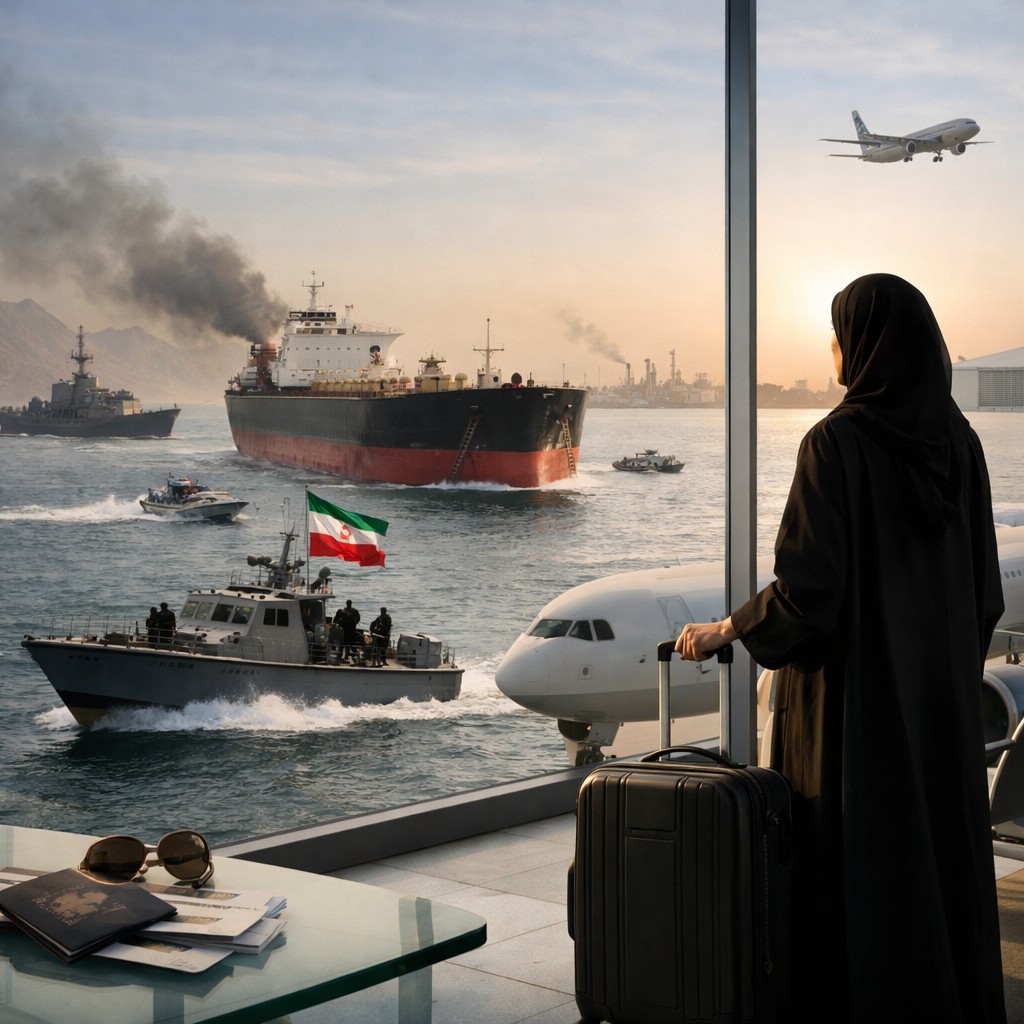
Strait of Hormuz tensions and Iran's shipping restrictions are unsettling travel across the Gulf. Here's what UAE residents and visitors need to know now.
Strait of Hormuz tensions are sending fresh ripples through travel and tourism planning across the Gulf and beyond. The UAE, alongside Bahrain, Oman, Saudi Arabia, Qatar, Kuwait, and more than a dozen other countries, is now navigating renewed uncertainty as one of the world’s most critical waterways comes under increased pressure from Iranian shipping restrictions.
What Is Happening at the Strait of Hormuz?
The Strait of Hormuz is the narrow channel separating the Arabian Gulf from the Gulf of Oman. It carries roughly 20 percent of the world’s oil and a significant share of global maritime trade, according to the US Energy Information Administration. Iran has introduced new shipping restrictions in the area, raising concerns among regional governments, shipping operators, airlines, and tourism bodies about knock-on effects for travel confidence and supply chains.
The restrictions follow a pattern of escalating friction that has periodically disrupted commercial activity in the strait over recent years. This latest development is being watched closely by governments from Iraq and Jordan to India, Pakistan, Turkey, and Azerbaijan, all of whom have strong economic and logistical ties to Gulf sea lanes.
How Do Strait of Hormuz Tensions Affect the UAE?
The UAE sits at the heart of Gulf trade and tourism. Dubai and Abu Dhabi collectively welcome tens of millions of international visitors every year, and both cities depend heavily on stable maritime and air corridors to sustain that flow. Any sustained disruption to Gulf shipping confidence tends to filter through to airline load factors, cruise itineraries, and hotel booking patterns.
Tour operators and travel agencies serving inbound and outbound UAE markets are already fielding questions from clients about safety and possible itinerary changes, particularly for cruise routes that pass through or near the Gulf of Oman. For the latest regional travel updates, follow our travel news coverage on Gulf News Blog.
Which Countries Are Caught in the Uncertainty?
The ripple effect is wide. The following countries are among those experiencing travel and tourism uncertainty linked to the current Strait of Hormuz tensions:
- Gulf and Arabian Peninsula: UAE, Bahrain, Oman, Saudi Arabia, Qatar, Kuwait
- Wider Middle East: Iraq, Jordan, Egypt
- South Asia and Central Asia: India, Pakistan, Azerbaijan
- Europe and Eurasia: Turkey
Each of these nations has economic or logistical exposure to Gulf sea lanes, whether through energy imports, cargo shipping, or inbound tourism flows that connect through UAE hub airports.
Why This Matters for Gulf Tourism and the Economy
The Gulf’s post-pandemic tourism recovery has been one of the region’s standout economic success stories. Saudi Arabia is deep into its Vision 2030 tourism push, the UAE has consistently broken visitor arrival records, and Qatar continues to build on its FIFA World Cup legacy. Sustained geopolitical friction at the Strait of Hormuz threatens to undermine booking confidence at a moment when all three countries are competing aggressively for global tourist spend.
Beyond tourism, maritime uncertainty affects fuel import costs, consumer goods pricing, and airline operational expenses. All of these factors indirectly shape the cost of a holiday in the region for residents and visitors alike. You can track how these economic pressures are developing in our finance and economy section. Regional governments and tourism authorities are monitoring the situation carefully, though no formal travel warnings have been issued as of the time of writing.
What Should Travellers Do Right Now?
Travel experts consistently advise checking official government travel advisories before booking or travelling to any area affected by Strait of Hormuz tensions. For UAE residents planning regional cruises or trips through the Gulf of Oman corridor, staying updated through official channels, your airline, and your travel insurer is the most practical first step.
Flexible booking options and comprehensive travel insurance that covers geopolitical disruption have become standard recommendations from agents handling Gulf itineraries in the current climate. If shipping restrictions tighten further or incidents occur in the strait, cruise lines and cargo-dependent hospitality supply chains could face more significant operational decisions in the weeks ahead. Stay informed with the latest updates in our daily news feed.

Related Posts
Stay Informed With the Latest & Most Important News
Previous Post
Next Post







Advertisement

-
 01UAE Team Emirates Stays Close in UCI Rankings Thanks to Tuckwell
 -
 02UAE E-Commerce Trends 2026: Why the Market Moves Fast
 -
 03Dubai Summer Surprises 2026: Full Arab Concert Lineup
 -
 04Sheikh Mohamed at G7: UAE Pledges Global Stability Role
 -
 05Windshield Sunshade in UAE Heat: Does It Actually Work?
 -
 06UAE Stocks Rally as Iran Ceasefire Talks Lift Gulf Markets
 -
 07Gulf Investors Blocked by European Rules, Saudi PIF Warns