



















Now Reading: Microwaving Slime Danger: Dubai Police Issues Burn Warning
-
01
Microwaving Slime Danger: Dubai Police Issues Burn Warning
Microwaving Slime Danger: Dubai Police Issues Burn Warning
Advertisement

Dubai Police warns parents about the microwaving slime trend sweeping social media. Find out why this viral craze poses serious burn risks for children.
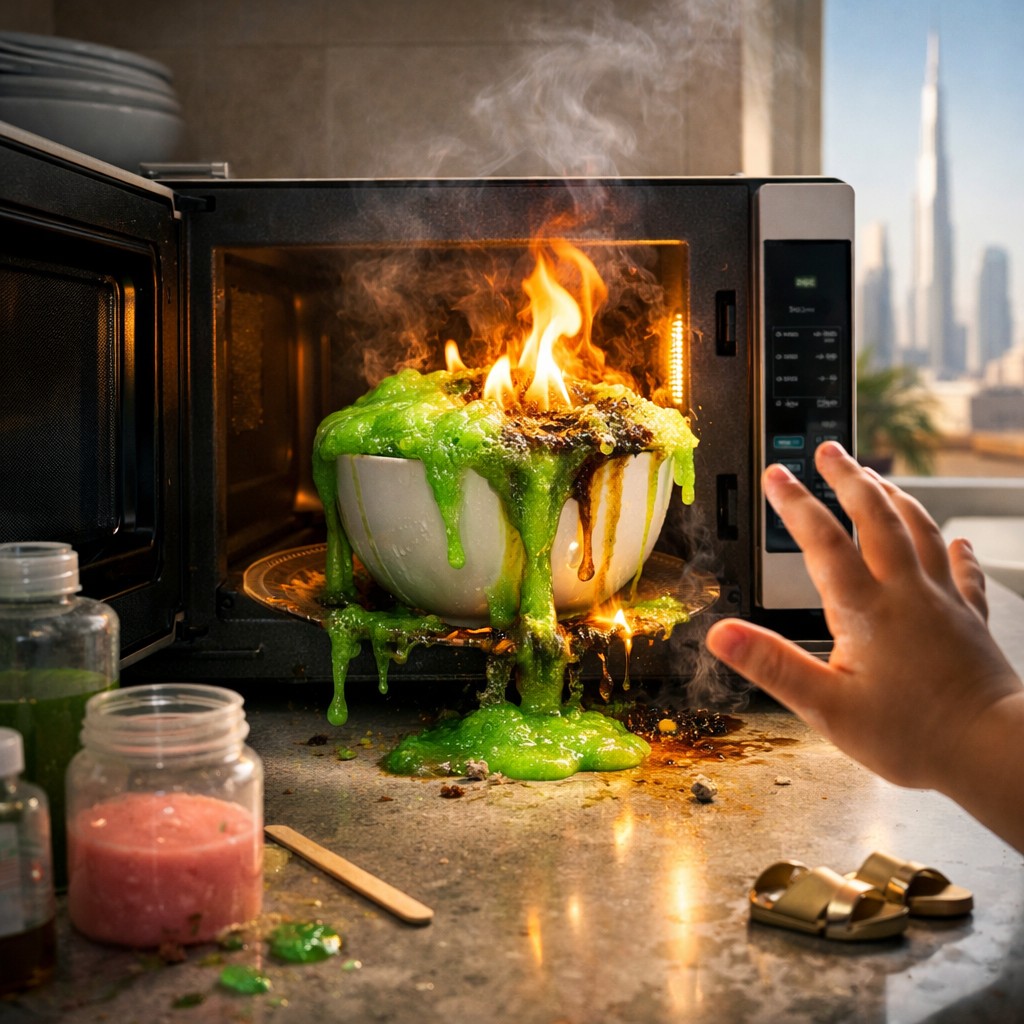
Dubai Police has issued a public safety warning over a social media trend that encourages children to microwave slime, a practice authorities say carries a real risk of severe burns. Parents across the UAE are being urged to monitor their children’s online activity and keep them away from this experiment at home.
What Is the Microwaving Slime Trend?
The trend has spread rapidly across platforms popular with younger audiences. Videos show users placing store-bought or homemade slime inside a microwave, then filming the results, which range from bubbling and expanding goo to superheated material that can cause serious burns on contact with skin.
The appeal is the visual spectacle. The danger is that children cannot always judge how hot the slime becomes or how quickly it can cause injury.
Why Did Dubai Police Step In?
Dubai Police flagged the trend after it gained traction online, recognising the risk of copycat behaviour among young residents. Authorities did not wait for local injuries to mount before acting. The warning is a precautionary measure aimed at cutting off the risk before it translates into emergency room visits.
The force urged parents, teachers and guardians to talk directly to children about the hazards of replicating social media stunts without adult supervision or any understanding of the science involved.
Why It Matters for the Gulf
Smartphone penetration and social media use among children in the UAE are among the highest in the region. That connectivity means viral trends, good or harmful, reach young audiences here faster than in many other parts of the world.
Households in the Gulf also tend to spend significant time indoors, particularly during summer months, where unsupervised kitchen experiments become more common. A warming slime that looks harmless on a screen can reach temperatures that cause contact burns in seconds, with no visible warning signs before the damage is done.
What Makes Heated Slime Dangerous?
Slime is typically made from polymers, glues and activators such as borax or contact lens solution. When microwaved, these compounds heat unevenly and can trap steam. The surface may appear cool while the interior remains dangerously hot, a risk factor that even adults can misjudge.
Children handling the slime immediately after microwaving face the greatest exposure. Spills on hands, arms or faces can cause burns that require medical treatment.
Quick Look: Why This Trend Is Higher Risk Than It Appears
- Uneven heating: Slime does not heat uniformly, so cool patches give a false sense of safety.
- Steam buildup: Trapped moisture can cause sudden eruptions of hot material.
- Chemical changes: Heat alters the polymer structure, making the slime stickier and harder to remove from skin.
- No clear visual cue: Unlike boiling water, dangerously hot slime looks the same as room-temperature slime.
- Peer pressure factor: Children attempt the trend to recreate viral content, skipping any safety steps shown online.
What Parents and Guardians Should Do
Dubai Police recommend having an open conversation with children about which online challenges are safe and which are not. Simply banning screen time rarely works. Explaining the specific risk, what burns feel like, how long recovery takes, and what medical treatment involves, tends to land harder with older children and teenagers.
Supervisors in schools and after-school programmes should also be aware of the trend, since children often replicate what they have seen online during unsupervised breaks or activity periods.
If a burn does occur, run cool water over the affected area for at least 10 minutes and seek medical attention immediately. Do not apply ice, butter or toothpaste, common home remedies that can worsen the injury.
The Bigger Picture on Viral Challenge Safety
This is not the first time UAE authorities have moved quickly against a harmful online trend. Dubai Police and other government bodies have previously warned against challenges involving dangerous substances, extreme physical feats and fire. Each warning reflects the same underlying reality: social media algorithms reward engagement, not safety, and children are the most vulnerable audience in that dynamic.
For full details on the official advisory, see the original report from ARN News Centre.
Disclaimer: This article contains general safety information. For medical advice on burns or injuries, consult a qualified healthcare professional.
Have you seen this trend circulating among children you know, and do you think social media platforms are doing enough to flag dangerous content before it goes viral? Share your thoughts in the comments below.


Stay Informed With the Latest & Most Important News
Previous Post
Next Post






Advertisement

-
 01UAE Team Emirates Stays Close in UCI Rankings Thanks to Tuckwell
 -
 02UAE E-Commerce Trends 2026: Why the Market Moves Fast
 -
 03Dubai Summer Surprises 2026: Full Arab Concert Lineup
 -
 04Sheikh Mohamed at G7: UAE Pledges Global Stability Role
 -
 05Windshield Sunshade in UAE Heat: Does It Actually Work?
 -
 06UAE Stocks Rally as Iran Ceasefire Talks Lift Gulf Markets
 -
 07Gulf Investors Blocked by European Rules, Saudi PIF Warns