
















Now Reading: MENA Broadcast Tech: What’s Reshaping Media in the Gulf
-
01
MENA Broadcast Tech: What’s Reshaping Media in the Gulf
MENA Broadcast Tech: What’s Reshaping Media in the Gulf
Advertisement

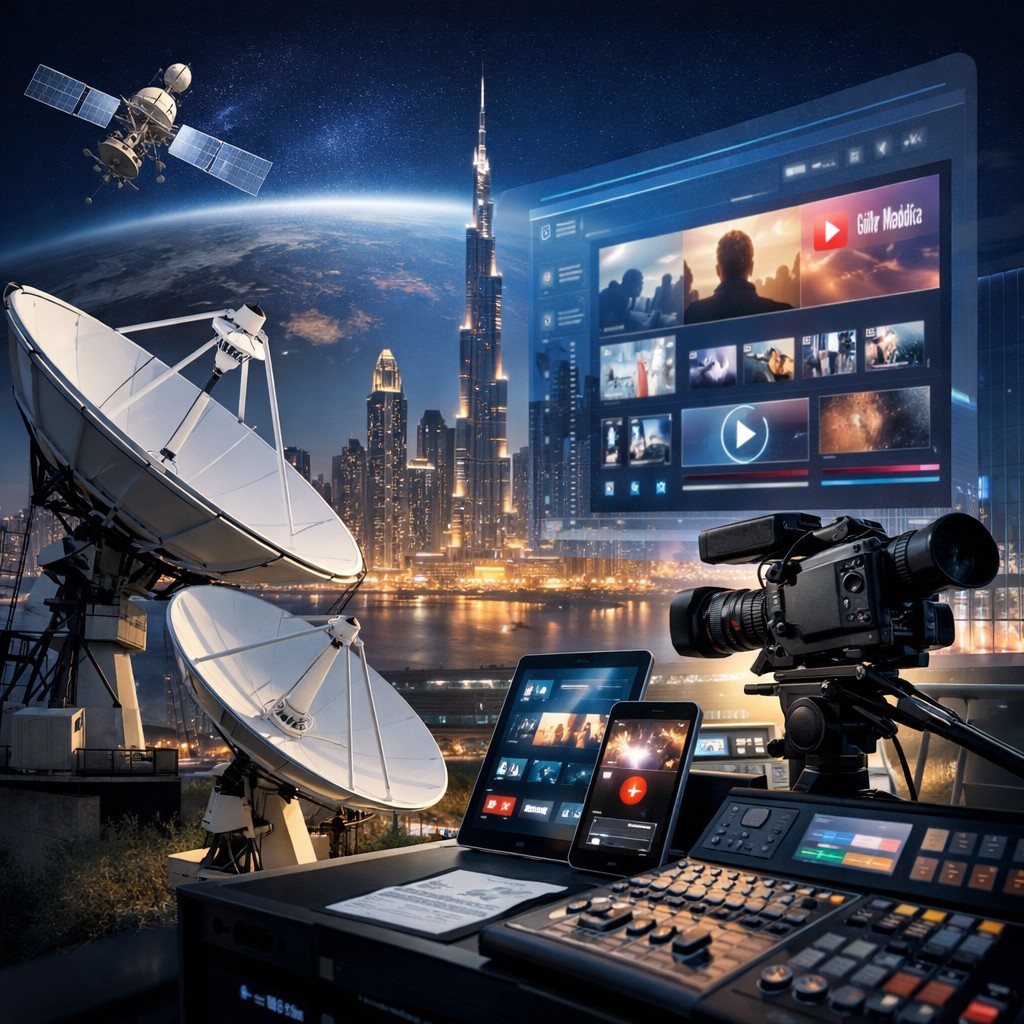
MENA broadcast media technology is evolving fast. Here's what the latest industry developments mean for the Gulf's satellite and streaming landscape. Click to read.
The MENA region’s broadcast and media technology sector is undergoing a significant shift, with satellite, streaming, and production infrastructure all being reworked to meet the demands of a growing, digitally connected audience. For the Gulf specifically, these changes carry direct consequences for how content is produced, distributed, and consumed.
What Is Driving Change in MENA Broadcast Media Right Now?
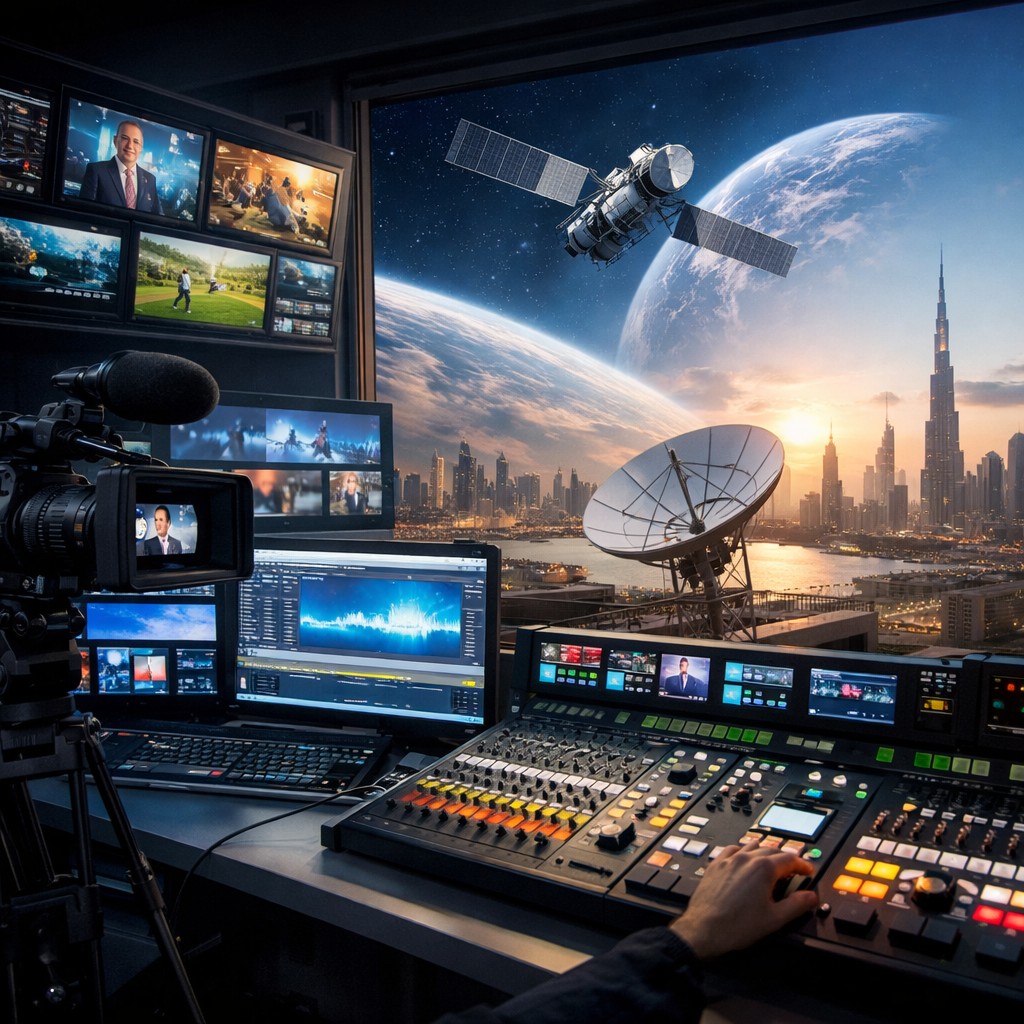
Several forces are converging at once. Satellite capacity is being renegotiated as over-the-top (OTT) platforms claim a larger share of viewership. Broadcasters across the Arab world are investing in IP-based production workflows, moving away from traditional hardware-heavy setups toward more flexible, cloud-integrated systems.
The result is a media landscape that looks markedly different from even five years ago, with agility now a core requirement rather than a luxury.
Why It Matters for the Gulf
The UAE and Saudi Arabia sit at the heart of this transformation. Both countries have positioned themselves as regional media hubs, with Dubai Media City and Riyadh’s growing production ecosystem attracting international broadcasters and technology vendors alike.
For Gulf audiences, the practical impact is more choice, sharper picture quality, and content that reaches screens faster than ever. For businesses operating in media, advertising, and telecommunications, the shift toward IP and cloud production opens new revenue streams but also demands faster adaptation.
How Is Satellite Technology Evolving Across the Region?
Satellite remains a critical distribution backbone for MENA, particularly for audiences in markets where broadband infrastructure is still developing. However, the role of satellite is changing. Rather than serving purely as a delivery mechanism, it is increasingly integrated with hybrid distribution models that blend traditional broadcast with internet delivery.
This hybrid approach allows broadcasters to reach rural and underserved communities via satellite while simultaneously delivering premium, on-demand content to urban viewers through high-speed internet connections.
Key Trends Shaping the MENA Media Tech Landscape
- Cloud production: Studios and broadcasters adopting cloud-based workflows to reduce hardware costs and enable remote production.
- IP-based broadcasting: The shift from traditional SDI infrastructure to internet protocol systems across Gulf broadcasters.
- OTT growth: Streaming platforms expanding Arabic-language content libraries to capture regional audiences.
- AI in media: Artificial intelligence being deployed for automated subtitling, content moderation, and personalised recommendations.
- Satellite-broadband hybrid: Integrated delivery models ensuring wider reach across diverse connectivity environments.
What Does This Mean for Content Creators in the UAE?
Creators and production houses based in the UAE are arguably the biggest beneficiaries of this infrastructure evolution. Lower barriers to high-quality production, combined with easier global distribution pathways, mean that homegrown Arabic content now has a realistic route to international audiences.
Platforms are actively competing for regional content, and the technical improvements in broadcast infrastructure mean that quality parity with global productions is increasingly achievable without exponentially higher budgets.
Industry Voices and Coverage
Coverage of these developments has been closely tracked by BroadcastPro ME, which remains one of the most authoritative sources tracking media technology across the MENA broadcast industry. Their reporting highlights the pace at which regional broadcasters are adopting new technologies and the commercial pressures pushing that adoption forward.
What Comes Next for MENA Broadcast?
The next 12 to 24 months are likely to bring further consolidation among technology vendors, deeper investment from Gulf sovereign funds in media infrastructure, and an acceleration of Arabic-language OTT content production. Regulatory frameworks in the UAE and Saudi Arabia will also play a role in shaping how quickly new broadcast technologies can be deployed commercially.
The region has the capital and the appetite. The question now is whether the talent pipeline and regulatory environment can keep pace with the technology.
As the Gulf’s media tech sector accelerates, we want to hear from you: which development, cloud production, satellite hybrids, or AI-driven content tools, do you think will have the biggest impact on how the region consumes media? Share your thoughts in the comments below.

Stay Informed With the Latest & Most Important News
Previous Post
Next Post







Advertisement

-
 01UAE Team Emirates Stays Close in UCI Rankings Thanks to Tuckwell
 -
 02UAE E-Commerce Trends 2026: Why the Market Moves Fast
 -
 03Dubai Summer Surprises 2026: Full Arab Concert Lineup
 -
 04Sheikh Mohamed at G7: UAE Pledges Global Stability Role
 -
 05Windshield Sunshade in UAE Heat: Does It Actually Work?
 -
 06UAE Stocks Rally as Iran Ceasefire Talks Lift Gulf Markets
 -
 07Gulf Investors Blocked by European Rules, Saudi PIF Warns