
















Now Reading: MENA Broadcast Tech: What’s Driving the Region’s Media Shift
-
01
MENA Broadcast Tech: What’s Driving the Region’s Media Shift
MENA Broadcast Tech: What’s Driving the Region’s Media Shift
Advertisement

MENA broadcast media technology is evolving fast. Here's what the latest satellite and production trends mean for Gulf audiences and broadcasters. Click to read.
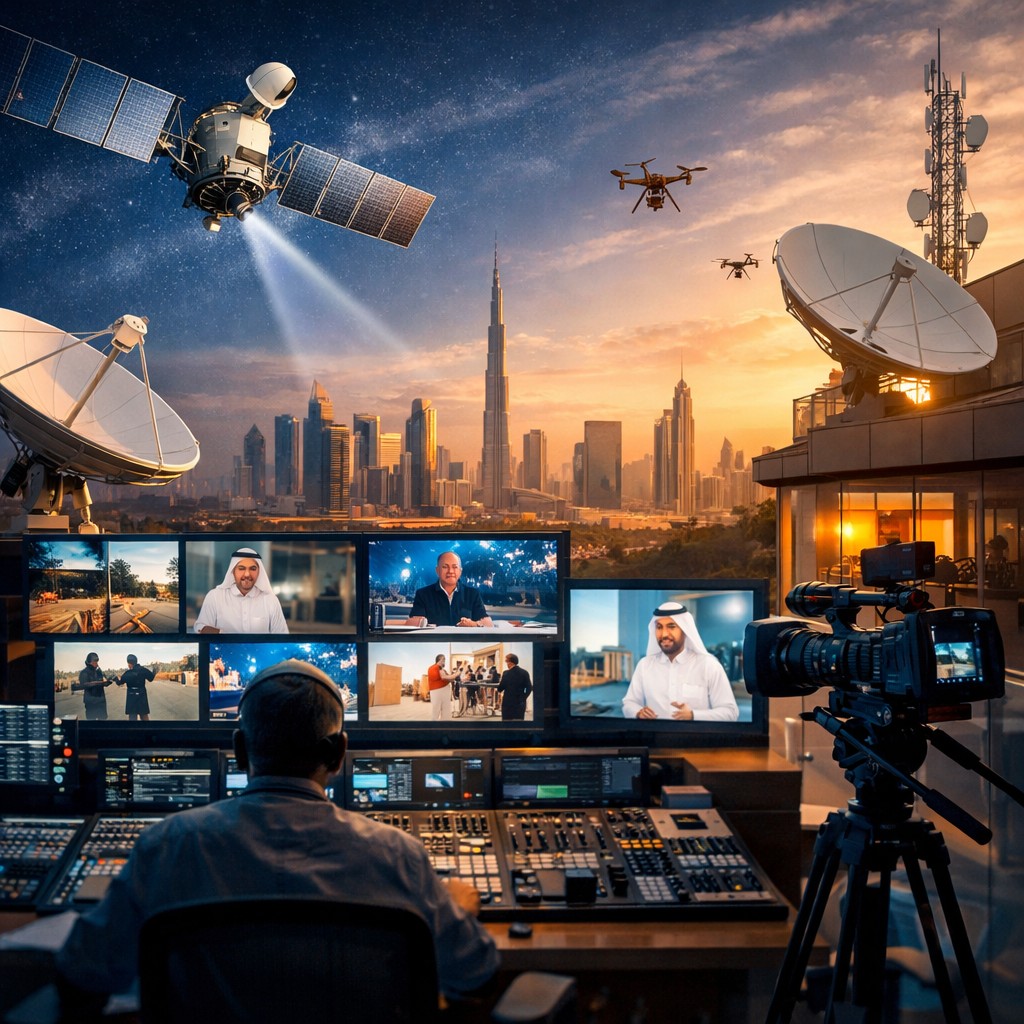
The MENA region’s broadcast and media technology sector is undergoing a significant transformation, with satellite infrastructure, production workflows and digital distribution converging at a pace that is reshaping how Gulf audiences consume content. From Riyadh to Dubai, broadcasters are investing in next-generation tools to stay competitive in an increasingly crowded media landscape.
What Is Happening in MENA Broadcast Technology Right Now?
Regional broadcasters are accelerating their shift toward IP-based production and cloud-enabled workflows. The traditional reliance on dedicated satellite uplinks is giving way to hybrid models that combine satellite reliability with the flexibility of internet-delivered content. This matters especially for live news and sports, two pillars of Gulf broadcast culture.
Satellite remains a backbone technology across the Middle East and North Africa, where geography and population distribution make terrestrial infrastructure less practical. However, the integration of over-the-top platforms alongside conventional satellite delivery is forcing media houses to rethink their entire distribution strategy.
Why Does This Matter for the Gulf?
The UAE and Saudi Arabia sit at the center of this shift. Both countries host major regional broadcast operations, and their governments have signaled strong support for media and entertainment as economic pillars, most visibly through Vision 2030 in Saudi Arabia and the UAE’s push to grow its creative economy.
For Gulf audiences, the practical result is more choice, better picture quality and faster access to live events. For broadcasters operating out of Dubai Media City or Riyadh’s media zones, it means capital investment decisions around equipment, satellite contracts and streaming licenses are more complex and more consequential than ever before.
How Are Satellite and Streaming Technologies Comparing in the Region?
| Technology | Key Strength | Key Challenge |
|---|---|---|
| Satellite Broadcast | Wide geographic reach, reliable for live events | High infrastructure cost, less interactive |
| IP/OTT Streaming | On-demand flexibility, data-driven targeting | Dependent on broadband penetration, latency risk |
| Hybrid Model | Combines reliability with digital agility | Complex to manage, requires skilled workforce |
What Are Regional Media Companies Doing to Adapt?
Broadcasters across the Gulf are upgrading master control rooms, adopting software-defined networking and training staff on cloud-based production tools. The appetite for 4K and HDR content is also pushing hardware refresh cycles forward, particularly among the larger free-to-air and pay-TV operators.
Events and trade gatherings focused on broadcast technology continue to draw significant attendance from UAE and Saudi-based professionals, reflecting how seriously the industry is taking this transition. Knowledge transfer and vendor partnerships are seen as critical to closing the skills gap that often accompanies rapid technological change.
What Does the Future of MENA Media Look Like?
Artificial intelligence is beginning to enter broadcast workflows, from automated subtitling in Arabic to AI-assisted content moderation and highlight generation for sports. These tools are no longer speculative, they are being tested and deployed by forward-looking regional players today.
The competitive pressure from global streaming giants operating in the region is also forcing local broadcasters to differentiate on local content, cultural relevance and Arabic-language production quality. That competition, paradoxically, may be the strongest driver pushing MENA broadcast technology forward.
For a detailed look at the latest developments across the sector, see the original report from BroadcastPro ME.
As the Gulf’s media landscape continues to evolve at speed, we want to hear from you: are regional broadcasters moving fast enough to keep up with what audiences here actually want, or is the technology outpacing the content?

Stay Informed With the Latest & Most Important News
Previous Post
Next Post






Advertisement

-
 01UAE Team Emirates Stays Close in UCI Rankings Thanks to Tuckwell
 -
 02UAE E-Commerce Trends 2026: Why the Market Moves Fast
 -
 03Dubai Summer Surprises 2026: Full Arab Concert Lineup
 -
 04Sheikh Mohamed at G7: UAE Pledges Global Stability Role
 -
 05Windshield Sunshade in UAE Heat: Does It Actually Work?
 -
 06UAE Stocks Rally as Iran Ceasefire Talks Lift Gulf Markets
 -
 07Gulf Investors Blocked by European Rules, Saudi PIF Warns