









Now Reading: Machado Vows Venezuela Return After Deadly Earthquake
-
01
Machado Vows Venezuela Return After Deadly Earthquake
Machado Vows Venezuela Return After Deadly Earthquake
Advertisement

Maria Corina Machado says she will return to Venezuela to aid earthquake victims. Here's what her pledge means and why the Gulf is watching closely.
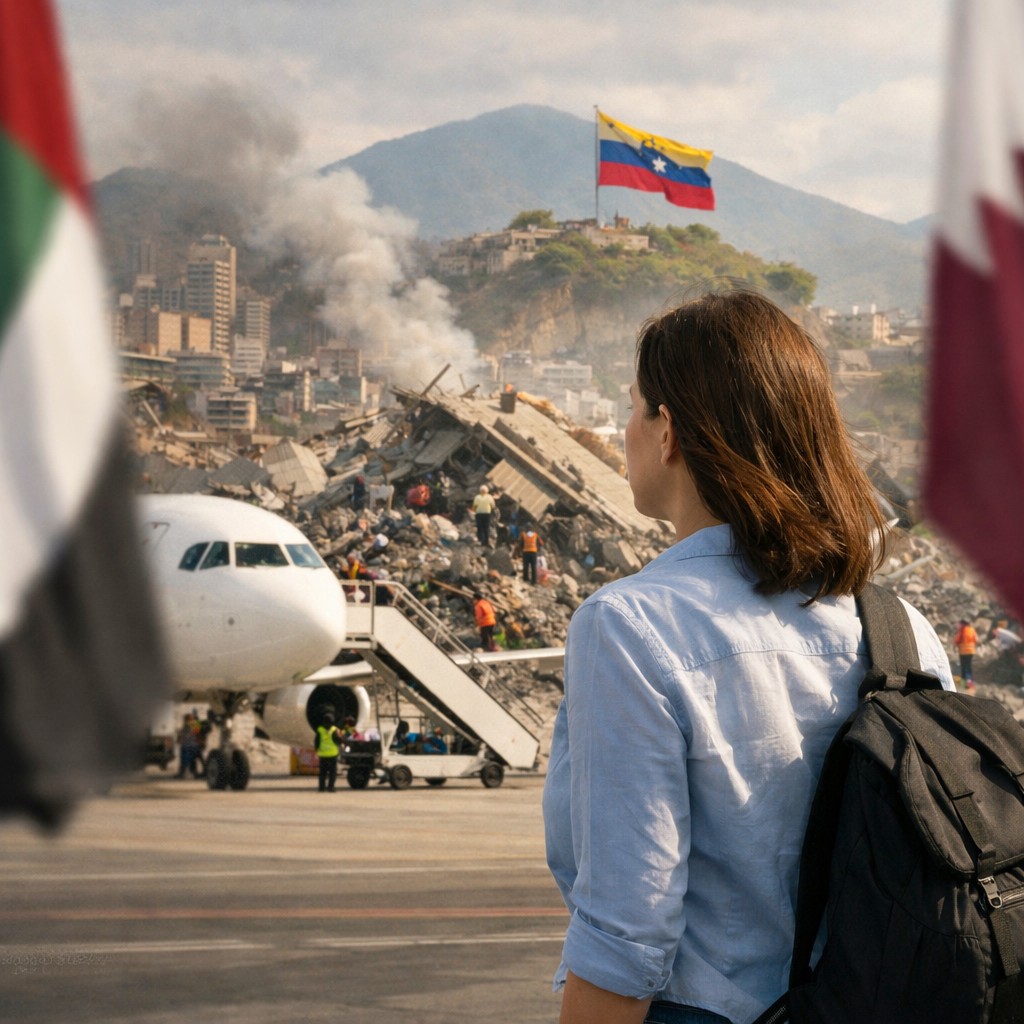
Venezuelan opposition leader Maria Corina Machado has pledged to return to her country in the wake of a damaging earthquake, saying she will work directly with victims on the ground. The announcement is significant: Machado has faced serious personal risk operating inside Venezuela under the Maduro government, making any return a high-stakes move.
Who Is Maria Corina Machado and Why Does Her Return Matter?
Machado is Venezuela’s most prominent opposition figure and has spent recent years navigating a political environment where dissent carries severe consequences. She has been barred from holding office by the Maduro government and has operated under constant threat of detention. A decision to re-enter Venezuela, particularly during a crisis, signals both courage and political calculation.
Her pledge comes after an earthquake struck Venezuelan territory, adding to the country’s already severe humanitarian pressures. Machado framed the decision as a duty to her compatriots, not a political maneuver, according to the original report.
What Is the Situation Inside Venezuela Right Now?
Venezuela was already grappling with economic collapse, food insecurity, and a mass emigration crisis before the earthquake struck. Natural disasters in countries with weakened infrastructure and limited government resources tend to compound existing suffering rapidly. Disaster relief logistics, supply chains, and coordination all become harder when state institutions are dysfunctional.
The opposition has long argued that the Maduro government mismanages aid, including international assistance, and that independent civil society actors are better positioned to reach ordinary Venezuelans.
Key Context: Venezuela’s Ongoing Crisis at a Glance
- Millions of Venezuelans have fled the country in one of Latin America’s largest displacement crises in modern history.
- The Maduro government has repeatedly restricted or expelled international humanitarian organizations.
- Machado has previously been banned from public office by the government-aligned electoral authority.
- Her return, if it happens, would mark one of the most visible opposition moves inside Venezuela in recent years.
Why It Matters for the Gulf
The UAE and broader Gulf states maintain active trade and diplomatic engagement across Latin America, and Venezuela’s instability has ripple effects on regional energy markets. Venezuela holds some of the world’s largest proven oil reserves, and any shift in its internal political dynamics, including a high-profile opposition resurgence, draws attention from Gulf energy planners and investors.
There is also a sizeable Venezuelan diaspora community across various countries, including some expats living and working in the UAE. Humanitarian crises in Venezuela tend to prompt fresh waves of emigration, which affects labor markets and communities globally, including in the Gulf.
Gulf-based aid organizations and donors with international mandates sometimes channel resources toward Latin American crises. A figure like Machado visibly leading relief efforts on the ground could open new channels for coordinated international assistance.
What Risks Does Machado Face if She Returns?
The risks are substantial. The Maduro government has arrested opposition figures, dissolved civil society groups, and used the judiciary as a political tool. Machado’s high international profile offers some protection, since her detention would draw immediate global condemnation, but it is not a guarantee of safety.
Her decision to go public with the pledge is itself a strategic move. By announcing her intentions openly, she makes it harder for authorities to act against her quietly. The international spotlight becomes a partial shield.
What Happens Next?
Whether Machado follows through, and how the government responds, will be closely watched by foreign governments, human rights groups, and Venezuelan exile communities worldwide. The earthquake has created both an urgent humanitarian need and a rare political opening for the opposition to demonstrate credibility and reach inside the country.
Her next steps could reshape how international partners engage with Venezuela’s fractured political landscape, particularly as pressure mounts on the Maduro government over its disaster response.
Disclaimer: This article covers a developing political situation. Information may change rapidly as events unfold. Readers should consult multiple news sources for the latest updates.
Do you think high-profile opposition leaders entering crisis zones makes a genuine difference for victims, or does it risk politicizing humanitarian relief? Share your thoughts in the comments below.

Stay Informed With the Latest & Most Important News
Previous Post
Next Post




Advertisement

-
 01UAE Team Emirates Stays Close in UCI Rankings Thanks to Tuckwell
 -
 02UAE E-Commerce Trends 2026: Why the Market Moves Fast
 -
 03Dubai Summer Surprises 2026: Full Arab Concert Lineup
 -
 04Sheikh Mohamed at G7: UAE Pledges Global Stability Role
 -
 05Windshield Sunshade in UAE Heat: Does It Actually Work?
 -
 06UAE Stocks Rally as Iran Ceasefire Talks Lift Gulf Markets
 -
 07Gulf Investors Blocked by European Rules, Saudi PIF Warns