















Now Reading: Iran Strikes Back as US Bombing Campaign Enters Week Two
-
01
Iran Strikes Back as US Bombing Campaign Enters Week Two
Iran Strikes Back as US Bombing Campaign Enters Week Two

Advertisement

Iran launches fresh attacks following six days of US strikes. Here's what's happening and why the escalation matters for the Gulf region. Read on.
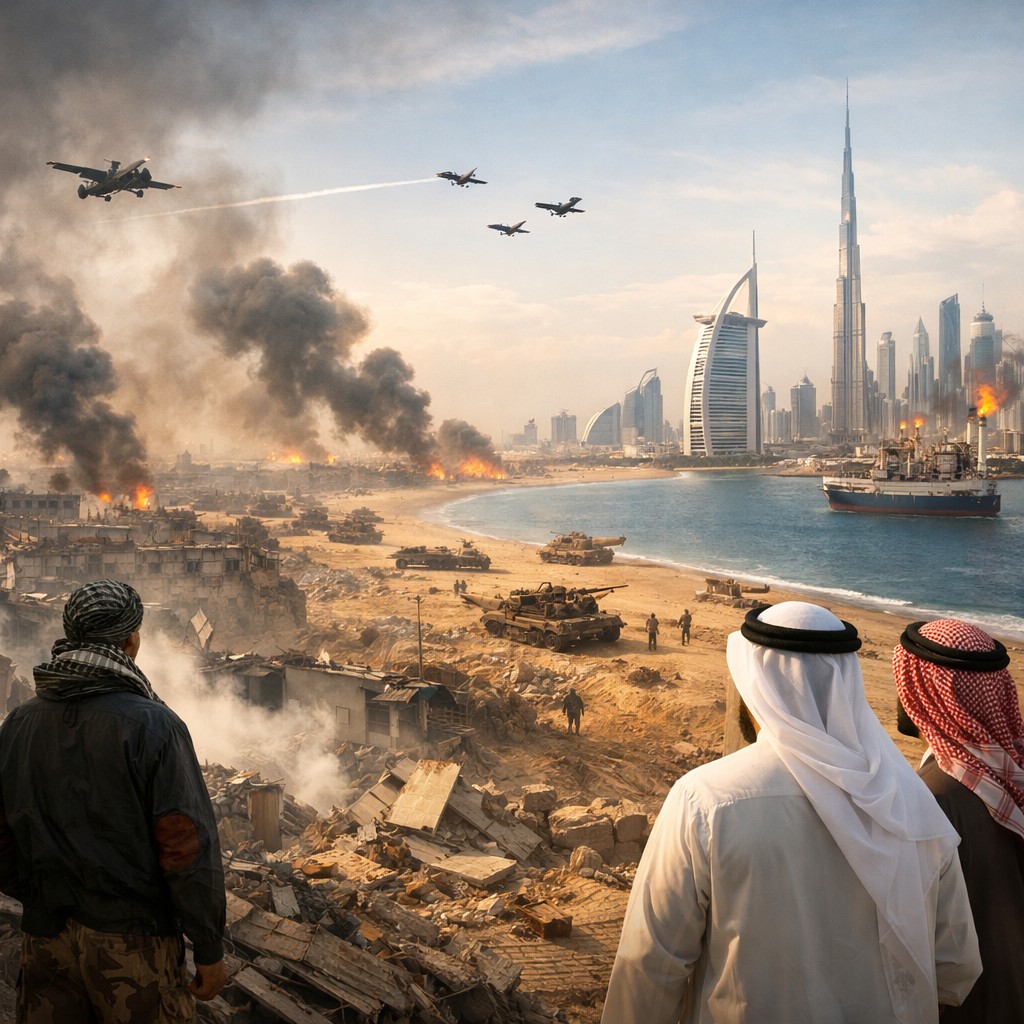
Iran has launched new retaliatory attacks as the United States presses into a sixth consecutive day of military strikes against Iranian targets. The escalating exchange marks one of the most serious direct military confrontations between the two countries in years, sending shockwaves through regional security calculations and global energy markets.
What happened after the sixth day of US strikes on Iran?
Rather than pulling back under sustained US military pressure, Iran responded with fresh offensive action following the latest round of American bombardment. The pattern signals that Tehran is not prepared to absorb strikes without hitting back, raising fears of a prolonged and widening conflict.
US forces have now maintained a continuous strike campaign across multiple days, targeting what American officials describe as military and nuclear-linked infrastructure inside Iran. Iran denies those characterizations and frames its counterattacks as legitimate self-defense under international law.
Why it matters for the Gulf
For UAE residents, Saudi nationals, and anyone living or working in the broader Gulf region, this conflict is not a distant news story. The Arabian Gulf sits at the crossroads of this confrontation, with critical shipping lanes, energy infrastructure, and millions of expatriate workers directly exposed to any spillover.
The Strait of Hormuz, through which roughly 20 percent of global oil trade passes, runs between Iran and the UAE. Any military escalation that threatens navigation in that corridor has immediate consequences for fuel prices, trade logistics, and economic stability across the GCC.
Gulf states have largely urged de-escalation through diplomatic channels, wary of being drawn into a conflict that could destabilize the security architecture they depend on. The UAE and Saudi Arabia have significant economic exposure to stable oil exports and foreign investment, both of which suffer when regional risk premiums spike.
How does the current escalation compare to past Iran-US confrontations?
| Incident | Year | Nature of Action |
|---|---|---|
| US kills Soleimani | 2020 | Targeted drone strike, Iran retaliates with ballistic missiles at US bases in Iraq |
| Iran attacks Israel, Israel responds | 2024 | Iran launches drones and missiles; multi-country interception follows |
| Sustained US strike campaign | 2025 | Six-plus days of US military strikes; Iran launches fresh counterattacks |
The current campaign appears broader in scope and longer in duration than previous flashpoints. A single strike or a one-night exchange is manageable for markets and diplomats. A rolling, multi-day campaign with active Iranian retaliation is a different threat profile entirely.
What are the risks of further escalation?
Military analysts watching the region warn that sustained tit-for-tat exchanges can develop their own momentum, making it harder for either side to find an exit ramp without appearing to back down domestically. Iran’s leadership faces internal pressure to demonstrate resolve. The US administration faces its own political imperatives.
For Gulf governments, the diplomatic priority is keeping their own territories and infrastructure out of the crossfire. Qatar, which hosts the largest US military base in the Middle East at Al Udeid, occupies a particularly sensitive position. Any Iranian strike that hits American assets in the Gulf would constitute a dramatic and dangerous escalation.
Oil prices and economic fallout
Energy markets have already reacted to the rising tension. Prolonged conflict near the Strait of Hormuz traditionally pushes crude oil prices higher, which has mixed effects across the Gulf. Oil exporters benefit from elevated prices, but the broader economic disruption, supply chain uncertainty, and investor hesitation can offset those gains quickly.
For the UAE, which has positioned itself as a stable business hub and neutral diplomatic actor, prolonged regional instability undermines that brand at a time when Dubai and Abu Dhabi are competing hard for global capital and talent.
For the full details on the latest military exchanges, see the original report via Gulf Business.
How do you think Gulf governments should respond if the conflict continues to escalate? Share your thoughts in the comments below.
Disclaimer: This article covers an active geopolitical and military situation. Developments are fast-moving and readers should consult multiple credible news sources for the latest information.

Related Posts

Stay Informed With the Latest & Most Important News
Previous Post
Next Post






Advertisement

-
 01UAE Team Emirates Stays Close in UCI Rankings Thanks to Tuckwell
 -
 02UAE E-Commerce Trends 2026: Why the Market Moves Fast
 -
 03Dubai Summer Surprises 2026: Full Arab Concert Lineup
 -
 04Sheikh Mohamed at G7: UAE Pledges Global Stability Role
 -
 05Windshield Sunshade in UAE Heat: Does It Actually Work?
 -
 06UAE Stocks Rally as Iran Ceasefire Talks Lift Gulf Markets
 -
 07Gulf Investors Blocked by European Rules, Saudi PIF Warns