














Now Reading: Indians in Dubai: How the War Disrupted Flights and Livelihoods
-
01
Indians in Dubai: How the War Disrupted Flights and Livelihoods
Indians in Dubai: How the War Disrupted Flights and Livelihoods

Advertisement

Indians in Dubai faced flight chaos and economic anxiety after the India-Pakistan conflict. Here's what changed and why it matters for the Gulf. Read more.
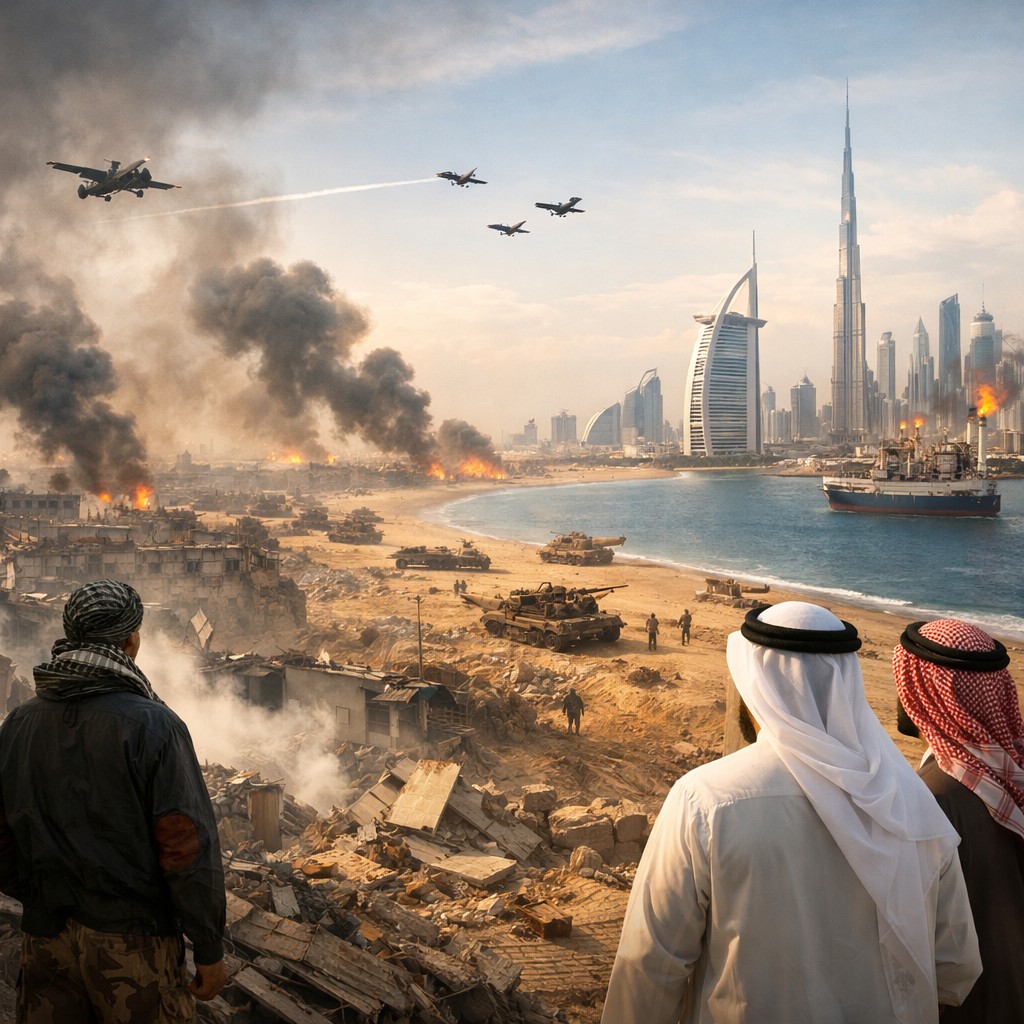
The brief but intense military conflict between India and Pakistan sent shockwaves through Dubai’s large Indian expat community, disrupting airline routes, stoking economic anxiety, and raising uncomfortable questions about stability for a diaspora that calls the UAE home. The fallout, while short-lived in military terms, left real marks on travel, remittances, and daily life across the Gulf.
What Happened to Flights Between India and the Gulf?
When Pakistan closed its airspace during the conflict, airlines operating between the Gulf and northern India faced immediate chaos. Routes that normally pass over Pakistani territory were either suspended or forced into lengthy diversions, pushing up fuel costs and travel times significantly.
Carriers including Air India and several Gulf-based airlines had to reroute flights southward, adding hours to journeys between Dubai and cities like Delhi and Amritsar. Some flights were cancelled outright during the peak of the hostilities, stranding passengers on both ends.
How Did Indian Expats in Dubai React?
Dubai is home to one of the largest Indian communities in the world, and the conflict triggered a wave of worry that went well beyond flight bookings. Many expats rushed to contact family in northern India, particularly those in border states like Punjab and Rajasthan, where the effects of the standoff were most acutely felt.
Social media groups for Indian residents in the UAE were flooded with requests for travel advice, messages of concern, and debates about whether to send family members back home or delay planned visits. The psychological toll on the community was visible even as the guns fell mostly silent.
Why It Matters for the Gulf Economy
Indians are the single largest expatriate group in the UAE, numbering in the millions and contributing heavily to sectors from construction and retail to finance and technology. Any prolonged conflict affecting India carries direct economic consequences for the Gulf.
Remittance flows, which run into tens of billions of dollars annually from the UAE to India, could have been disrupted had the conflict escalated. Business confidence among Indian entrepreneurs operating in Dubai also took a knock, with some reportedly pausing investment decisions until the situation clarified.
Key Pressure Points at a Glance
- Airspace: Pakistan’s closure forced costly rerouting for Gulf-India flights
- Remittances: Uncertainty rattled the India-UAE money transfer corridor
- Tourism: Indians planning UAE trips paused bookings during peak tension
- Trade: India-UAE commerce, worth billions annually, faced short-term uncertainty
- Workforce mobility: Visa runs and travel for new workers were briefly stalled
Airlines Caught in the Middle
Gulf carriers have long depended on the India corridor as one of their most profitable. Emirates, flydubai, Air Arabia, and IndiGo all operate dense schedules between the UAE and Indian cities. The airspace disruption, even temporary, exposed how vulnerable those routes are to geopolitical turbulence in the subcontinent.
Longer routings mean higher operating costs, and airlines will factor that risk into pricing if instability recurs. Budget travellers, who make up a huge share of the India-Gulf passenger base, would feel that pinch most sharply.
What Comes Next for the Indian Diaspora in the Gulf?
With a ceasefire in place, flights are gradually returning to normal routing as airspace reopens. But the episode served as a reminder that the Gulf’s Indian communities are not insulated from events back home. Their economic wellbeing, family ties, and sense of security are all tightly bound to stability on the subcontinent.
UAE authorities have not issued any specific advisories targeting the Indian community, and day-to-day life in Dubai has continued largely uninterrupted. Still, community leaders say the past week sharpened awareness of how quickly normalcy can unravel.
For a deeper breakdown of the broader implications, see the original report from Deccan Herald.
Disclaimer: This article covers a developing geopolitical situation. Conditions may change rapidly; readers should consult official government and airline sources for the latest travel guidance.
If you are an Indian expat in the UAE, how did the conflict affect your plans or your family back home? Share your experience in the comments below.

Stay Informed With the Latest & Most Important News
Previous Post
Next Post







Advertisement

-
 01UAE Team Emirates Stays Close in UCI Rankings Thanks to Tuckwell
 -
 02UAE E-Commerce Trends 2026: Why the Market Moves Fast
 -
 03Dubai Summer Surprises 2026: Full Arab Concert Lineup
 -
 04Sheikh Mohamed at G7: UAE Pledges Global Stability Role
 -
 05Windshield Sunshade in UAE Heat: Does It Actually Work?
 -
 06UAE Stocks Rally as Iran Ceasefire Talks Lift Gulf Markets
 -
 07Gulf Investors Blocked by European Rules, Saudi PIF Warns