


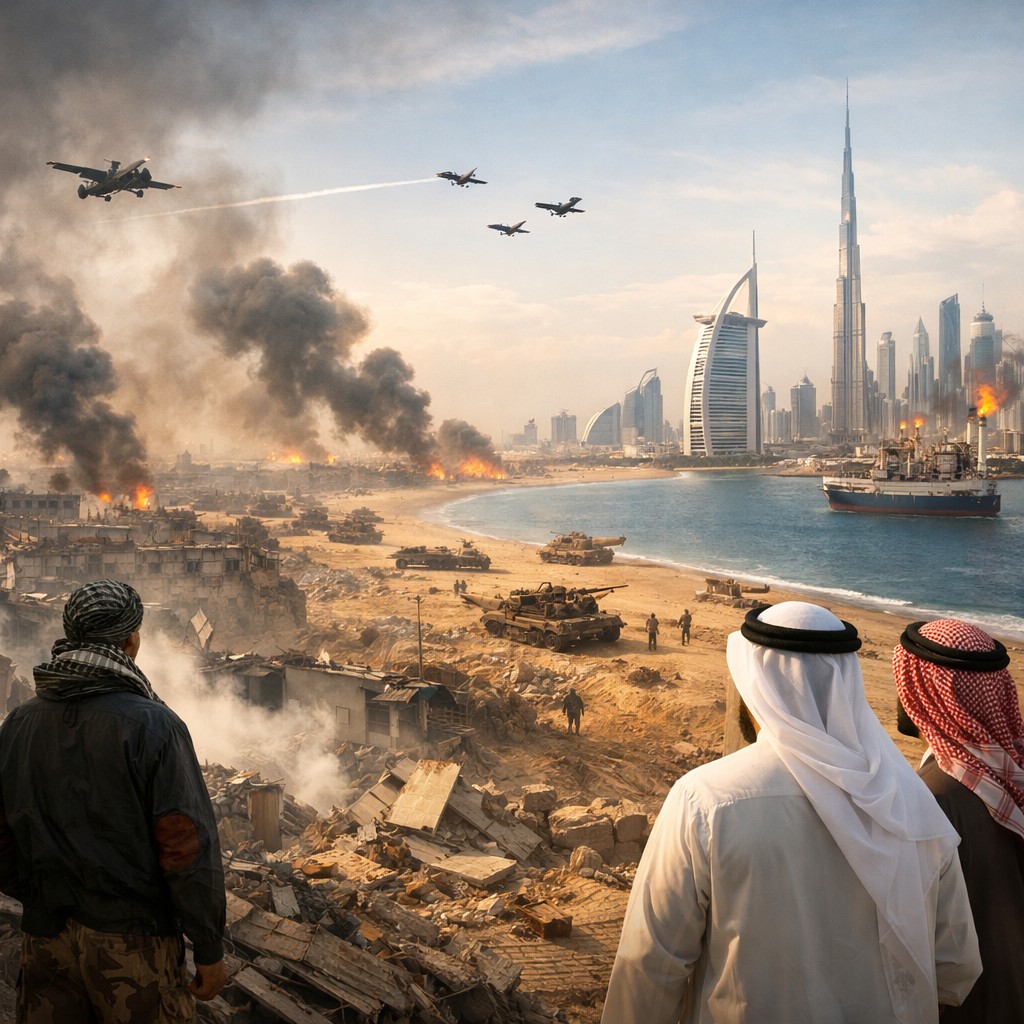














Now Reading: Qatar Reports 3 Injured by Debris From Iran-US Strikes
-
01
Qatar Reports 3 Injured by Debris From Iran-US Strikes
Qatar Reports 3 Injured by Debris From Iran-US Strikes
Advertisement

Qatar confirms 3 people injured, including a child, after interception debris from the Iran-US conflict. Here's what Gulf residents need to know now.
Qatar has confirmed that three people were wounded, among them a child, after debris from interception activity linked to the ongoing Iran-US conflict landed in the country. The injuries mark the first confirmed civilian casualties on Gulf soil directly tied to the military exchange, raising urgent questions about regional safety as tensions between Washington and Tehran escalate.
What Happened in Qatar?
Qatari authorities said the injuries resulted from debris falling after aerial interceptions, not from a direct strike on Qatari territory. The government moved quickly to clarify the nature of the incident, emphasizing that the country had not been targeted. Still, the fact that civilians were hurt, including a child, signals how quickly the conflict’s physical consequences are spilling beyond Iran and the United States.
No further details on the condition of the three injured individuals were immediately available, according to the original report.
Why It Matters for the Gulf
The Gulf region hosts some of the world’s most significant US military infrastructure, including Al Udeid Air Base in Qatar, the largest American airbase in the Middle East. When high-altitude interceptions occur over or near the Gulf, falling debris does not respect borders. This incident is a stark reminder that proximity to conflict zones carries physical risk even for countries not party to the fighting.
Gulf states have largely pursued diplomatic neutrality during the Iran-US standoff, but neutrality offers no protection from stray ordnance or intercept debris traveling at speed from the sky. The UAE, Bahrain, Kuwait, and Saudi Arabia, all of which host US military personnel or assets, face a similar exposure.
How Does This Fit the Broader Iran-US Escalation?
The United States and Iran have traded military strikes in what has become the most direct confrontation between the two countries in decades. Washington targeted Iranian nuclear and military sites; Tehran responded with missile and drone launches. Both sides have deployed advanced air-defense systems, and the interceptions themselves generate high-velocity fragments that can scatter over wide areas.
Key Facts at a Glance
- Injured in Qatar: 3, including one child
- Cause: Debris from aerial interceptions, not a direct strike
- Qatar’s position: Not a target; incident attributed to interception fallout
- US military presence in Qatar: Al Udeid Air Base, the largest US airbase in the Middle East
- Nature of conflict: Iran-US direct military exchange involving strikes on Iranian nuclear sites
What Gulf Residents Should Know
Residents and expatriates across the Gulf should stay close to official government communications. Authorities in Qatar, the UAE, and neighboring states have emergency alert systems that broadcast guidance during security incidents. Avoiding outdoor areas during active aerial activity in any country where such exchanges are reported is a basic precaution.
Travel advisories from multiple Western governments have already been updated to reflect elevated risk across parts of the Middle East. Anyone with travel plans to or through the region should check their government’s foreign affairs website before departure.
What Comes Next?
Diplomatic channels remain active even as military operations continue. Qatar itself has historically played a key mediation role in regional disputes, and Doha’s confirmation of civilian injuries from interception debris may add pressure on all parties to pursue a ceasefire or at minimum establish clearer de-confliction zones over Gulf airspace.
The international community is watching closely. Any further incidents involving civilian casualties in neutral Gulf states could accelerate calls for an emergency United Nations Security Council session.
Disclaimer: This article covers an active geopolitical and military situation. Information may change rapidly; readers should follow official government and credible news sources for the latest developments.
With debris from a conflict hundreds of kilometers away now landing on Qatari soil and wounding a child, the line between regional bystander and conflict casualty is blurring fast. Do you think Gulf governments are doing enough to protect civilians from the fallout of the Iran-US standoff? Share your thoughts in the comments below.

Related Posts


Stay Informed With the Latest & Most Important News
Previous Post
Next Post







Advertisement

-
 01UAE Team Emirates Stays Close in UCI Rankings Thanks to Tuckwell
 -
 02UAE E-Commerce Trends 2026: Why the Market Moves Fast
 -
 03Dubai Summer Surprises 2026: Full Arab Concert Lineup
 -
 04Sheikh Mohamed at G7: UAE Pledges Global Stability Role
 -
 05Windshield Sunshade in UAE Heat: Does It Actually Work?
 -
 06UAE Stocks Rally as Iran Ceasefire Talks Lift Gulf Markets
 -
 07Gulf Investors Blocked by European Rules, Saudi PIF Warns