


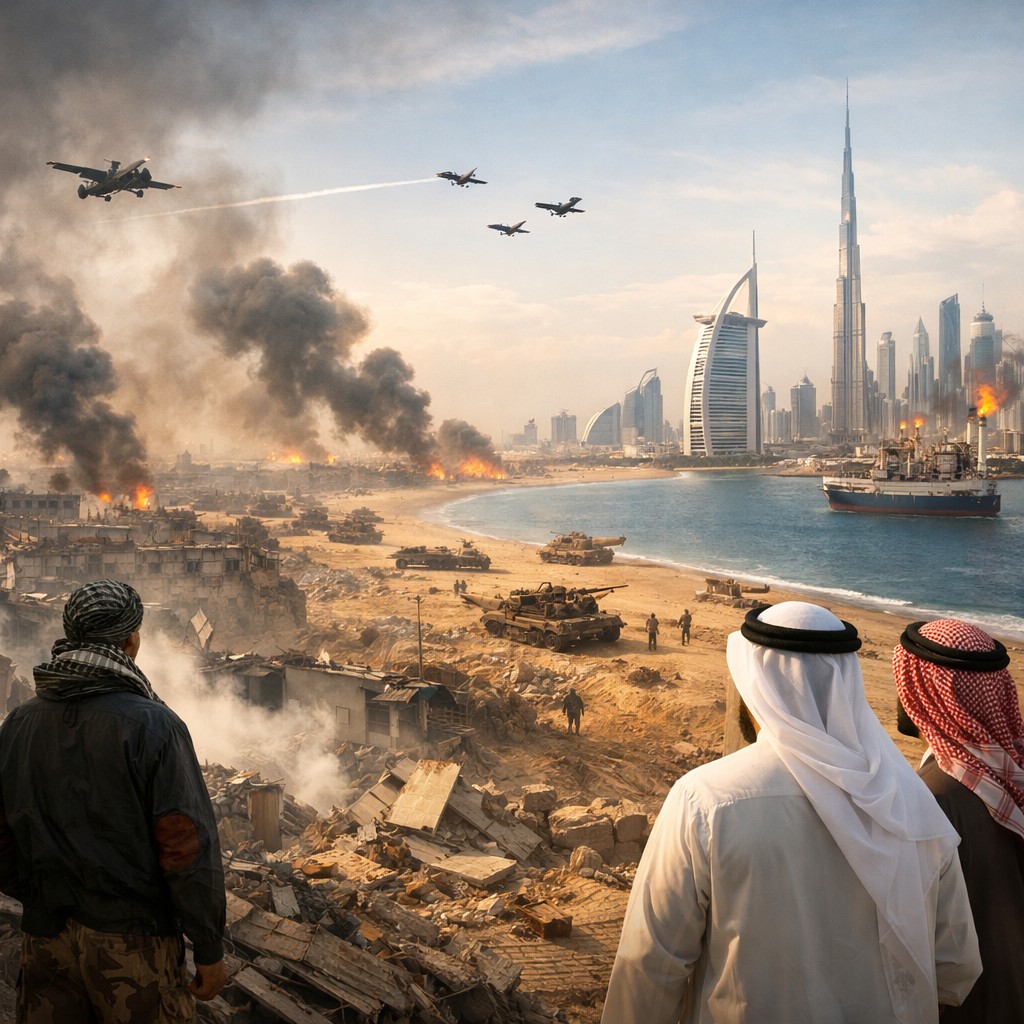






Now Reading: US-Iran Conflict: What Gulf Residents Need to Know Now
-
01
US-Iran Conflict: What Gulf Residents Need to Know Now
US-Iran Conflict: What Gulf Residents Need to Know Now
Advertisement

The US-Iran conflict is escalating with fresh Gulf attacks. Here's what it means for the region, energy markets, and everyday life in the UAE.
Tensions between the United States and Iran have sharply escalated, with fresh military exchanges raising alarm across the Gulf. The confrontation threatens regional stability, global oil supply chains, and the daily calculus of security for millions of residents across the UAE and neighboring states.
What is happening between the US and Iran right now?
The latest round of hostilities involves direct military strikes and counter-strikes that have pushed the two powers closer to open conflict than at any point in recent years. Both sides have traded aggressive rhetoric alongside the attacks, with Washington warning of consequences and Tehran vowing retaliation.
The sequence of events has alarmed Gulf governments, who occupy a geographic and diplomatic position directly in the crossfire of any broader escalation.
Where are the attacks taking place?
Strike activity has been reported across multiple flashpoints in and around the Gulf, including sites linked to Iran-backed groups. The targeting of assets in the broader region, rather than on Iranian or American soil alone, signals a deliberate strategy of proxy pressure that directly implicates Gulf states as potential collateral terrain.
Naval and aerial incidents in the Gulf waterways remain a particular concern, given how much global shipping, including energy exports, passes through these corridors.
Why it matters for the Gulf
The UAE, Saudi Arabia, Bahrain and Kuwait are not bystanders here. These countries host American military installations, maintain complex diplomatic relationships with Iran, and depend on stable waterways for their own trade and energy exports. Any miscalculation that broadens the conflict puts all of that at risk.
The Strait of Hormuz, through which roughly 20 percent of global oil supply flows, sits at the epicenter of this standoff. A serious disruption there would send shockwaves through energy prices worldwide, hitting Gulf producers and importers alike.
How could this affect oil prices and the economy?
Markets are already nervy. Oil prices tend to spike on any credible threat to Gulf supply routes, and sustained conflict would compound inflationary pressures that many economies are still working through. For UAE residents, the knock-on effects could touch fuel costs, aviation, and the broader business environment.
Key pressure points at a glance
- Strait of Hormuz: Critical chokepoint for global oil and gas transit
- US military bases: Present in UAE, Bahrain, Qatar and Kuwait, making Gulf states potential targets
- Iran-backed proxies: Active in Yemen, Iraq and Lebanon, extending the conflict’s geographic footprint
- Diplomatic fallout: Gulf states walking a tightrope between Washington and Tehran relationships
- Shipping insurance: War-risk premiums rise sharply during escalation, raising trade costs
What are Gulf governments saying?
Official statements from regional capitals have been measured, calling for de-escalation and dialogue while stopping short of choosing sides publicly. That balancing act reflects the reality that Gulf states have economic and security ties to both Washington and, to varying degrees, Tehran.
The UAE in particular has worked in recent years to reduce friction with Iran while maintaining its alliance with the United States, a dual-track approach that becomes harder to sustain the deeper the conflict goes.
Is there a risk of the conflict spreading further?
Security analysts are watching Iran-aligned groups in Yemen, Iraq and the wider Levant for signs of coordinated action. Previous escalation cycles have seen Houthi drone attacks on Saudi infrastructure and rocket fire targeting American personnel in Iraq, suggesting the risk of a multi-front widening is real, not theoretical.
For the average Gulf resident, that means the situation warrants attention even if day-to-day life currently appears normal. Government advisories, travel warnings and insurance markets are among the early indicators worth monitoring.
What should UAE residents do?
There is no cause for panic, but staying informed is sensible. Monitor updates from the UAE’s official channels, check travel advisories if you have regional trips planned, and be aware that financial markets may see volatility if the situation deteriorates. The UAE government has robust emergency and civil defense frameworks in place.
For the full breakdown of the military and diplomatic developments driving this crisis, read the original report from Gulf Business.
As the standoff between Washington and Tehran deepens, how do you think Gulf governments should respond, and what concerns you most about the potential fallout? Share your thoughts in the comments below.
Disclaimer: This article covers an evolving geopolitical situation. Readers should consult official government sources for security advisories and financial guidance.

Related Posts


Stay Informed With the Latest & Most Important News
Previous Post
Next Post








Advertisement

-
 01Sheikh Mohamed at G7: UAE Pledges Global Stability Role
 -
 02UAE Team Emirates Stays Close in UCI Rankings Thanks to Tuckwell
 -
 03UAE Stocks Rally as Iran Ceasefire Talks Lift Gulf Markets
 -
 04Gulf Investors Blocked by European Rules, Saudi PIF Warns
 -
 05Windshield Sunshade in UAE Heat: Does It Actually Work?
 -
 06UAE Tourism 2025: UK Lifts Warning as Hotels and Flights Boom
 -
 07Working on a Public Holiday in UAE: Know Your Rights