














Now Reading: 2026 Pilgrimage Boom: E-Visas & Digital Passes Change Hajj Travel
-
01
2026 Pilgrimage Boom: E-Visas & Digital Passes Change Hajj Travel
2026 Pilgrimage Boom: E-Visas & Digital Passes Change Hajj Travel
Advertisement

The 2026 pilgrimage boom is reshaping religious travel across Mecca, Medina, Dubai and Doha. Digital passes and instant e-visas are changing everything. Read on.
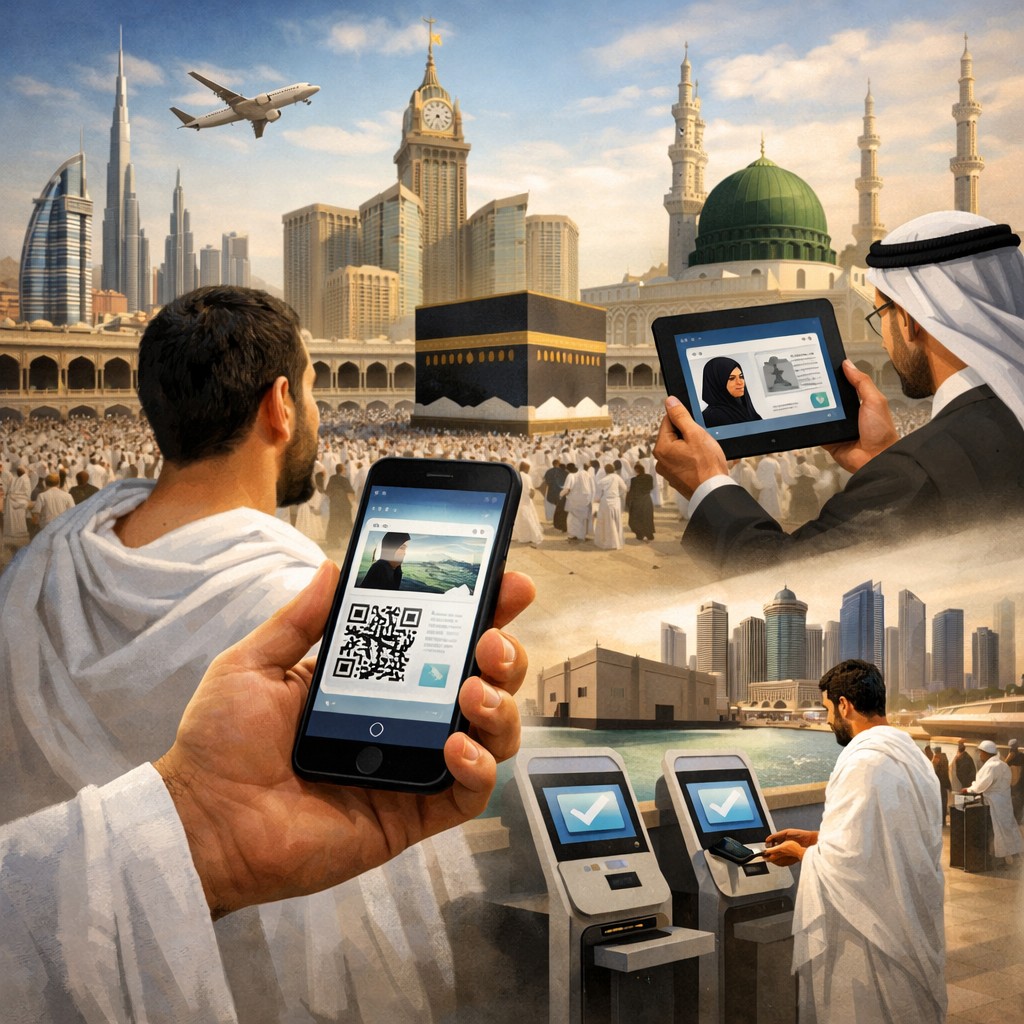
Major cities across the Gulf and Saudi Arabia, including Mecca, Medina, Jeddah, Riyadh, Doha, and Dubai, are gearing up for a surge in religious tourism in 2026. New digital darshan passes and instant e-visa systems are set to overhaul how millions of pilgrims plan, book, and complete their journeys.
What Is Driving the 2026 Pilgrimage Surge?
The convergence of post-pandemic travel recovery, growing Muslim populations worldwide, and aggressive tourism investment across the Gulf has created the conditions for a historic spike in pilgrimage numbers next year. Authorities in multiple cities are not waiting, they are already upgrading infrastructure, streamlining border processes, and rolling out technology to handle the anticipated crowds.
Saudi Arabia has made expanding Hajj and Umrah capacity a central pillar of its Vision 2030 agenda, and that investment is now bearing visible fruit as 2026 approaches.
How Do Digital Darshan Passes Work?
Digital darshan passes allow pilgrims to pre-book timed entry slots to holy sites, reducing overcrowding and cutting down the hours-long queues that have long frustrated visitors. The system is modelled partly on appointment-based entry frameworks already used at popular temples in India, now adapted for the unique scale and sanctity of Islamic holy sites.
For pilgrims arriving from across Asia, Africa, and the West, having a confirmed, time-stamped access credential before they even board their flight removes a significant layer of uncertainty from the journey.
What Does Instant E-Visa Access Mean for Pilgrims?
Saudi Arabia’s push toward instant e-visa processing is arguably the single biggest logistical shift for international pilgrims. Travellers who previously navigated weeks of paperwork through embassies and approved travel agents can now receive clearance digitally, sometimes within hours.
This matters most for first-time pilgrims from countries with historically slow visa processing, including parts of South and Southeast Asia, sub-Saharan Africa, and Central Asia, regions that collectively account for a large share of Hajj and Umrah attendance.
Why It Matters for the Gulf
The ripple effect extends well beyond Saudi borders. Dubai and Doha are positioning themselves as premium transit and hospitality hubs for pilgrims travelling to and from the holy cities. Airlines including Emirates, Qatar Airways, and flydubai stand to benefit directly from increased seat demand on routes connecting pilgrim-heavy markets to the Arabian Peninsula.
Hotels, tour operators, and retail across the UAE and Qatar are already reporting elevated forward bookings tied to religious travel packages for 2026.
Key Cities in the 2026 Pilgrimage Network
- Mecca: Primary destination, home to Masjid al-Haram and the Kaaba
- Medina: Site of the Prophet’s Mosque, essential stop for most pilgrims
- Jeddah: Main international gateway, King Abdulaziz International Airport
- Riyadh: Administrative and logistics hub for pilgrimage coordination
- Dubai: Leading transit point and hospitality base for international pilgrims
- Doha: Secondary transit hub, growing share of pilgrim flight traffic
What Infrastructure Is Being Built or Upgraded?
Expansion projects around the Grand Mosque in Mecca continue at pace, with new crowd management technology, expanded transportation links, and upgraded accommodation corridors all in various stages of completion. Medina’s hospitality zone near the Prophet’s Mosque has also seen significant hotel development aimed at mid-range and budget pilgrims.
In Jeddah, the airport is undergoing capacity upgrades specifically designed to ease the notorious bottleneck that occurs during peak Hajj season, when hundreds of thousands of pilgrims arrive within a compressed window of days.
Is This a Permanent Shift in Religious Travel?
Industry observers believe the digital tools being introduced for 2026 are not a one-season experiment. If the e-visa and digital access systems perform well under pressure, they are likely to become the permanent baseline for pilgrimage management, replacing legacy paper-based systems that have persisted for decades.
That would represent a fundamental change in how the world’s largest annual religious gathering is administered, with technology sitting at the centre rather than the margins of the process.
For the full breakdown of how these cities are coordinating their preparations, see the original report from Travel And Tour World.
With millions of pilgrims expected and so much new technology being deployed at once, do you think digital passes and instant e-visas will genuinely transform the Hajj experience, or will the sheer scale of 2026 expose the limits of these systems? Share your thoughts in the comments.

Related Posts

Stay Informed With the Latest & Most Important News
Previous Post
Next Post








Advertisement

-
 01UAE Team Emirates Stays Close in UCI Rankings Thanks to Tuckwell
 -
 02UAE E-Commerce Trends 2026: Why the Market Moves Fast
 -
 03Dubai Summer Surprises 2026: Full Arab Concert Lineup
 -
 04Sheikh Mohamed at G7: UAE Pledges Global Stability Role
 -
 05Windshield Sunshade in UAE Heat: Does It Actually Work?
 -
 06UAE Stocks Rally as Iran Ceasefire Talks Lift Gulf Markets
 -
 07Gulf Investors Blocked by European Rules, Saudi PIF Warns